
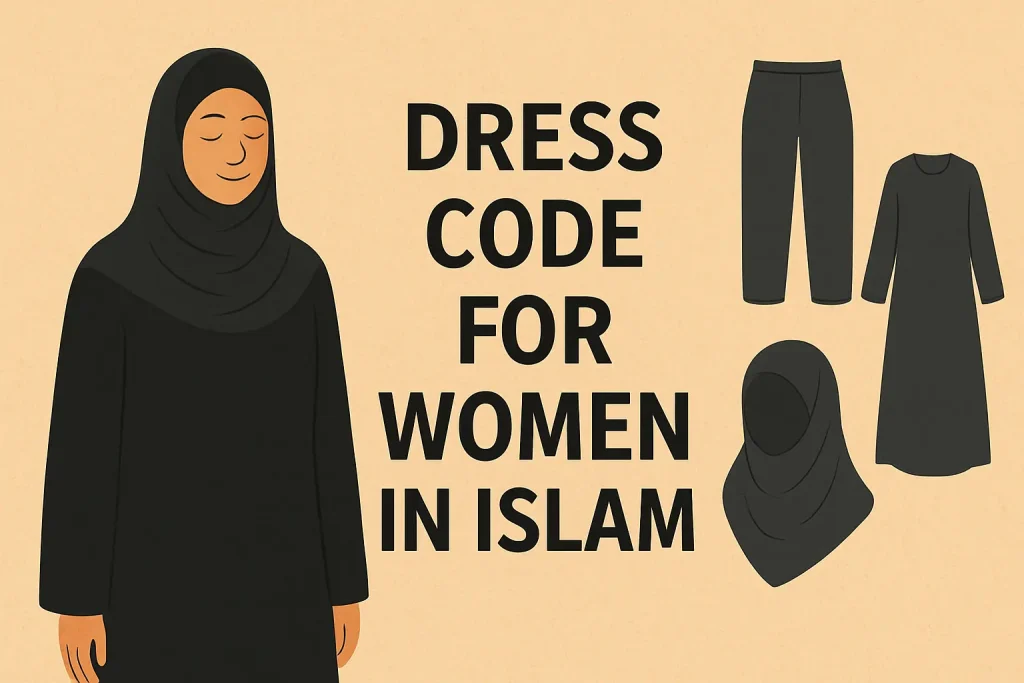
In today’s era of growing fashion trends and modernism, the topic of the Islamic female dress code is one of the most discussed subjects. Many Muslim women and even non-Muslims want to know what Islam teaches about modesty and what Muslim women are allowed to wear. While every culture and religion has its own guidelines, Islam provides a universal and timeless system of modesty. Allah has commanded Muslim women to dress in a way that protects their dignity, preserves their modesty, and maintains their honor and identity as Muslim women. This is the core principle of the female Muslim dress code.
In this article, we will explore what types of clothing Muslim women are allowed to wear, the wisdom behind these guidelines, and the common misconceptions about women’s dress in Islam.
Wisdom behind the Islamic Dress Code for Females
Before discussing specific clothing, it is obligatory for us to understand why Islam places such a strong emphasis on modesty. Modesty is essential because it protects a person’s honor, strengthens character, and builds moral value.
For women, modesty safeguards their identity and intellect, giving them dignity and respect in society. Modesty is not only about clothing; it is a principle that reflects inner strength, dignity, and a character that benefits both the individual and the community.
Allah says in the Quran:
“O Prophet! Tell your wives, your daughters, and the believing women to draw their cloaks (jalabib) over themselves.”
(Surah Al-Ahzab 33:59)
This verse clearly emphasizes the importance of covering and modesty for Muslim women.
The Prophet ﷺ said:
“Modesty(Hayaa) is a part of faith.”
(Sahih Muslim 36a)
Islam teaches that both men and women should dress modestly. The female dress code in Islam has been explained in detail and emphasized strongly. This is because women are often more vulnerable in society, especially in public spaces, and modest guidelines help protect their dignity and honor.
It is important to understand that these guidelines are not meant to restrict women unnecessarily. Instead, Islam encourages modesty to safeguard women, preserve their respect, and maintain moral and social harmony.
Fundamental Guidelines for Women’s Dress in Islam
The Islamic dress code for women is guided by clear, universal principles that apply to Muslim women worldwide, whether in Pakistan, Malaysia, Turkey, Indonesia, Europe, or elsewhere. It is not about following a specific outfit or fashion, but about upholding modesty, dignity, and respect. By adhering to these principles, Muslim women can select clothing that reflects their cultural background, environment, and personal preferences while fulfilling the requirements of Islam.
1. Dress Should Fully Cover the Awrah
The term ‘Awrah’ comes from Arabic and, in Islam, refers to the parts of the body that must be covered. In Urdu, it’s also called ‘Satr’. For women, the Awrah generally includes the entire body except the face and hands, which are considered visible in public.
This comes from the Quranic verse:
“And tell the believing women to lower their gaze and guard their chastity, and not to reveal their adornments except what normally appears.”
(Surah An-Nur 24:31)
While many scholars consider the face and hands as visible, it is preferable for women to cover their faces before non-Mahram men.
2. The Clothing Must Be Loose and Non-Transparent
This means that women should avoid clothing that is tight or transparent. No part of the body should be visible through the clothes, and garments should not cling in a way that reveals the body’s shape, as such attire goes against the principles of Islamic modesty.
The Prophet ﷺ said:
“Women who are clothed yet naked… will not enter Paradise nor smell its fragrance.”
(Sahih Muslim)
This hadith refers to clothing that is tight, transparent, or revealing. Therefore, when choosing clothing, women should ensure that it is neither transparent nor form-fitting, so that their modesty and dignity are preserved.
3. The Dress Should Not Resemble Men’s Clothing
Women should avoid wearing clothing that resembles men’s attire. Their clothing should emphasize femininity and be clearly distinct from what men wear. The reason for this is that the Prophet Muhammad ﷺ prohibited men from imitating women and women from imitating men. Therefore, Muslim women should choose clothing that reflects their femininity and maintains a clear distinction from men’s dress, in accordance with Islamic guidance.
4. The Dress Should Not Resemble Clothing Specific to Non-Muslims
Islam prohibits both men and women from wearing clothing specific to non-Muslims. As a religion with a distinct identity, Muslims are encouraged to maintain their unique cultural and religious character.
Muslims should avoid adopting styles or clothing from other religions or cultures merely to impress others. Preserving their identity is important, and they should dress in a way that reflects Islamic principles rather than imitating non-Muslim traditions.
5. The Clothing Should Not Attract Unnecessary Attention
Islam allows women to wear clothing that is beautiful yet modest, without exaggeration or excessive display. The attire should enhance modesty and humility rather than attract unnecessary attention from others. Muslim women are encouraged to choose dresses that reflect elegance while maintaining dignity
What Are Muslim Women Allowed to Wear?
Islam allows women freedom in styling and designing their clothing, provided the basic principles of modesty are maintained. Muslim women can choose any style or design they like, provided that the clothing is modest, loose, and covers the body appropriately.
Acceptable Clothing Options Include:
- Abayas
- Jilbabs
- Long loose dresses
- Loose tops with wide trousers
- Maxi skirts
- Shalwar kameez
- Modest cultural garments
- Hijab with modest outfits
The female Muslim dress code does not limit colors or fabrics. Women may dress beautifully with modesty, dignity, and Islamic identity.
The Hijab
In the Islamic dress code for women, the most modest form of clothing is the Hijab. Muslim women in many countries wear the Hijab when going to the market or any public place, especially in the presence of men. Hijab in Islam means more than just a scarf; it is a complete concept.
Allah says:
“And let them draw their veils(khumur) over their chests, and not reveal their hidden adornments.”
(Surah An-Nur 24:31)
The Hijab provides complete covering, including the hair and other necessary areas.
Hijab includes:
- Dressing modestly
- Covering the hair and chest
- Behaving respectfully
- Lowering the gaze
The Islamic dress code for females emphasizes modesty, dignity, and respect, allowing freedom in style while preserving identity and honor. Beyond clothing, it reflects a woman’s character, behavior, and faith, making modesty an integral part of a Muslim woman’s life.