
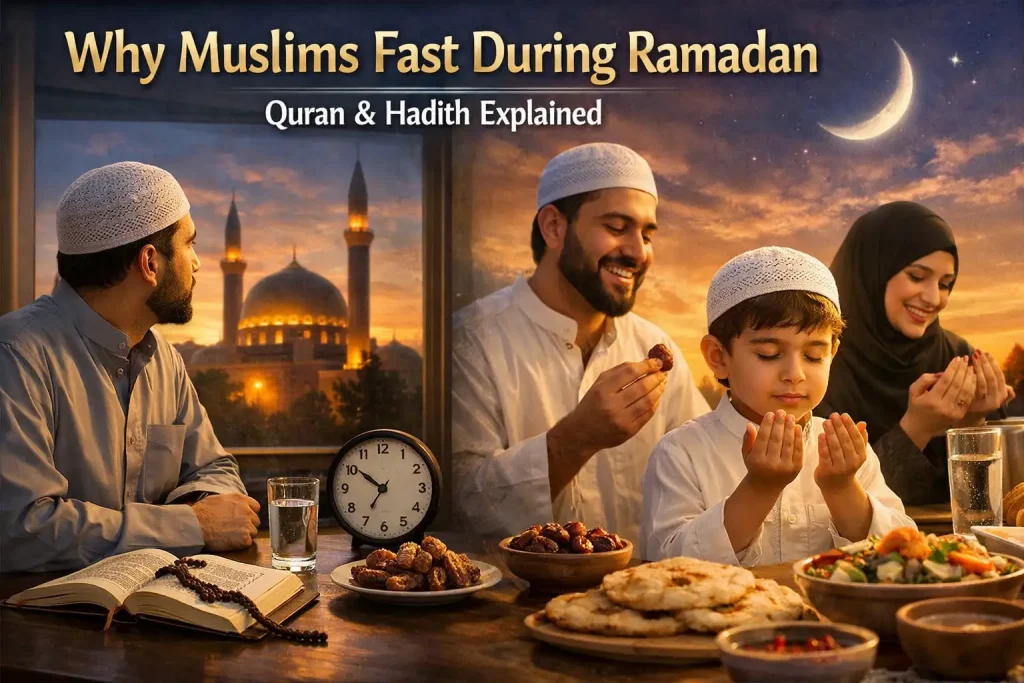
Ramadan is a blessed month in which the soul is purified, the heart becomes soft, and, most importantly, one’s connection with Allah grows deep and strong. Ramadan is not merely about abstaining from food and drink; it is a sacred month that fosters spiritual reflection, self-discipline, and devotion.
However, sometimes the question arises: why do Muslims fast during Ramadan? What is the purpose behind fasting in Ramadan, and why is it essential in Islam?
In this article, we will discuss in depth the significance of fasting in Ramadan according to the Qur’an and Hadith, as well as the divine and spiritual wisdom behind this blessed month.
What is Fasting in Islam?
The word Sawm in Arabic refers to fasting and is considered one of the five pillars of Islam. Fasting involves abstaining from food, drink, smoking, sexual activity, and sinful actions from dawn until sunset during the holy month of Ramadan, and it is obligatory for all eligible Muslims.
Fasting is not only a physical act of worship but also a spiritual one. Its primary purpose is to attain Taqwa, along with developing self-restraint and empathy for the less fortunate. Fasting is not merely a ritual; it is a spiritual journey that purifies the heart and strengthens one’s relationship with Allah.
Significance of Fasting in the Quran and Hadiths
The Qur’an and authentic Hadiths highlight the immense virtues and significance of fasting during Ramadan at multiple occasions. Here, we explore the significance of Ramadan fasting in light of these divine teachings.
Quran Verses About Fasting in Ramadan
The Qur’an offers clear and profound guidance on the practice of fasting and its true purpose. Mentioned nearly seven times across various contexts, fasting holds a central place in Islam. Some of the most important Qur’anic verses highlighting the significance of fasting include:
- Surah Al-Baqarah, Verse 183
“O you who have believed, decreed upon you is fasting as it was decreed upon those before you that you may become righteous.”
This verse highlights the primary purpose of fasting: to achieve taqwa, or mindfulness of Allah.
- Surah Al-Baqarah, Verse 184
“Fasting is prescribed for a specific number of days. But whoever among you is ill or traveling, let them make up the missed fasts on other days. For those who can fast only with great difficulty, a compensation can be offered by feeding a needy person for each day missed. However, whoever does more voluntarily, it is better for them. And fasting is better for you, if only you truly knew.”
This verse teaches flexibility and mercy in Islam, ensuring fasting is an act of sincere devotion, not hardship.
- Surah Al-Baqarah, Verse 185
“Ramadan is the month in which the Qur’an was revealed as guidance for mankind, clear proofs of guidance, and the criterion (between right and wrong). So whoever of you witnesses this month, let them fast it. But whoever is ill or on a journey, then an equal number of other days. Allah intends ease for you, and He does not intend hardship for you, and [He wants] for you to complete the period and to glorify Allah for that to which He has guided you, and perhaps you will be grateful.”
Ramadan is not only the month of fasting but also the month of divine revelation and heartfelt reflection, underscoring the profound significance and sacredness of this blessed month.
Hadiths About Fasting in Ramadan
The sayings of Prophet Muhammad about fasting ﷺ highlight the profound spiritual, social, and personal benefits of fasting, guiding believers toward a balanced and mindful life. Some of the most important Hadiths on this topic include:
- Prophet Muhammad ﷺ said:
“Whoever fasts Ramadan out of sincere faith and hoping to attain Allah’s rewards, then all his past sins will be forgiven.”
(Sahih Bukhari, Hadith 38)
- He ﷺ also said:
“Fasting is a shield. When one of you fasts, he should avoid sexual relations and quarreling. If someone insults him or fights, let him say: I am fasting.”
- The Prophet ﷺ added further
“By Him in Whose Hands my soul is, the smell coming out from the mouth of a fasting person is better in the sight of Allah than the smell of musk.
(Sahih al-Bukhari 1894)
Purpose of Fasting in Ramadan
Understanding the true purpose of fasting in Ramadan allows Muslims to experience it as more than just refraining from food and drink. It becomes a journey of the heart and soul, a time to strengthen faith, cultivate patience, purify intentions, and draw closer to Allah. Beyond physical abstinence, fasting nurtures self-discipline, empathy for the less fortunate, and a deep sense of spiritual fulfillment. The main purposes of fasting can be summarized as:
- Developing Taqwa
As stated in the Qur’an, Allah explains that the primary purpose of fasting is to attain taqwa. This taqwa refers to being conscious of Allah, avoiding sins out of reverence for Him, and actively engaging in righteous deeds.
- Spiritual Purification
Throughout the day, while in the state of fasting, they distance themselves from sins, harmful thoughts, and worldly desires, focusing entirely on prayers and drawing closer to Allah, which purifies their spirit from wrongdoing.
- Empathy for the Less Fortunate
By enduring hunger and thirst throughout the day, a person develops a profound empathy for the poor, truly understanding the struggles of those who face hunger daily. This awareness touches the heart, inspiring generosity and motivating them to give charity (sadaqah), thereby fulfilling their social and moral responsibility.
- Patience, Self-Control, and Resilience
Enduring hunger and thirst throughout the day has another benefit: it teaches patience. By guarding themselves from sins, their self-control increases, allowing them to restrain their desires and avoid falling into Satan’s temptations.
Importance of Fasting in Islam
Fasting is a pillar of Islam with both spiritual and worldly rewards.
Spiritual Rewards
As the Hadith confirms, fasting with sincerity results in forgiveness and divine blessings.
Health Benefits
Fasting provides physical detoxification, improves metabolism, and enhances mental clarity.
Social Harmony
Ramadan encourages generosity, community bonding, and empathy, strengthening societal values.
Final Thoughts
In essence, fasting during Ramadan is far more than abstaining from food and drink; it is a complete spiritual journey that nurtures the heart, mind, and soul. Through fasting, Muslims cultivate taqwa, patience, self-discipline, and empathy, while strengthening their connection with Allah. It is a time of reflection, purification, and generosity that transforms both the individual and the community. By embracing the wisdom of Ramadan, believers not only attain divine rewards but also experience profound personal growth and spiritual fulfillment.