
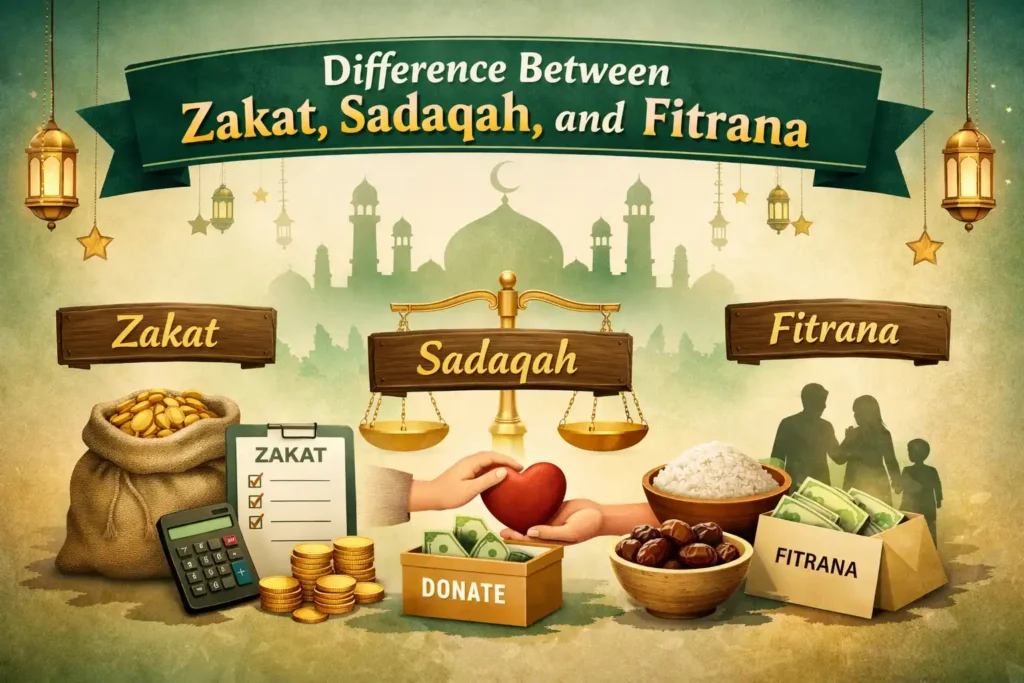
You may have often heard three charity-related terms commonly mentioned in Islamic discussions: Zakat, Sadaqah, and Fitrana (Zakat al-Fitr). Many Muslims use these terms interchangeably, assuming they all refer to the same type of charity. However, in reality, Islam clearly differentiates between these three forms of charity, and each has its own distinct purpose, rulings, and conditions.
Therefore, understanding the difference between Zakat, Sadaqah, and Fitrana is essential to fulfilling our religious obligations correctly and attaining the maximum reward from Allah.
This comprehensive guide provides a detailed comparison of Zakat vs Sadaqah vs Fitrana, helping you clearly understand when, how, and to whom each form of charity should be given according to Islamic teachings.
What Is Zakat in Islam?
Zakat is an obligatory (fard) form of charity and one of the five pillars of Islam. It is a compulsory act of worship that a Muslim must pay as a fixed portion of their total wealth if they meet the required financial threshold, known as Nisab. Narrated by Ibn Abbas that
The Prophet (SAW) said that:
“Allah has made it obligatory for them to pay the Zakat from their property, and it is to be taken from the wealthy among them and given to the poor.”
(Sahih al-Bukhari 1395)
Zakat does not decrease wealth; rather, it increases it. It also purifies one’s wealth and cleanses the heart from greed.
Key Features of Zakat
- It is Obligatory (Fard)
- Fixed rate (2.5% on savings and wealth)
- Given once a year after wealth completes one lunar year
- Paid only by Sahib-e-Nisab
- Can only be given to specific categories mentioned in the Quran (Surah At-Tawbah 9:60)
What Is Sadaqah in Islam?
Sadaqah is a voluntary form of charity that is given solely for the pleasure of Allah. Unlike Zakat, Sadaqah is not obligatory (fard). There is no fixed amount, time, or condition for giving Sadaqah—even a single rupee given purely for the sake of Allah is considered Sadaqah, and Allah will reward it.
The Prophet ﷺ said:
“Every act of kindness is Sadaqah.”
(Sahih Muslim)
Sadaqah protects a person from calamities and increases blessings in life.
Key Features of Sadaqah
- It is Voluntary (Nafl)
- Can be given at any time
- No minimum wealth required
- Can be given to anyone, including family
- Includes money, food, smiles, help, or good words,
What Is Fitrana in Islam?
Fitrana, also known as Zakat al-Fitr, is an obligatory form of charity that must be given at the end of Ramadan before the Eid al-Fitr prayer. Its primary purpose is to purify the fasts from any shortcomings or mistakes and to support the poor and needy, so they too can celebrate Eid with dignity and joy.
The Prophet ﷺ said:
“If anyone pays it before the prayer (of ‘Id), it will be accepted as zakat. If anyone pays it after the prayer, that will be a sadaqah like other sadaqahs (alms).”
(Sunan Abu Dawood 1609)
Key Features of Fitrana
- Obligatory for every Muslim, regardless of age
- Paid on behalf of dependents as well
- Given before Eid prayer
- Fixed amount (food or its cash value)
- Only given to the poor and needy
Zakat vs Sadaqah vs Fitrana (Comparison Table)
| Aspect | Zakat | Sadaqah | Fitrana |
| Obligation | Fard | Voluntary | Wajib |
| Time | Once yearly | Anytime | End of Ramadan |
| Amount | Fixed (2.5%) | No limit | Fixed amount |
| Who Pays | Sahib-e-Nisab | Anyone | Every Muslim |
| Purpose | Purify wealth | Gain reward | Purify fasting |
| Recipients | Limited (Quranic) | Anyone | Poor & needy |
Key Difference
The key difference between Zakat, Sadaqah, and Fitrana is:
- Zakat is compulsory and calculated.
- Sadaqah is voluntary and flexible.
- Fitrana is linked specifically to Ramadan and Eid.
Final thoughts
In summary, while Zakat, Sadaqah, and Fitrana are all forms of charity in Islam, each serves a unique purpose and follows specific rules. Zakat is a compulsory annual act that purifies wealth and supports eligible recipients. Sadaqah is voluntary, flexible, and can be given at any time to anyone, including through simple acts of kindness. Fitrana is a mandatory charity tied specifically to Ramadan, ensuring that the poor can celebrate Eid with dignity.
By understanding these differences and giving each type of charity correctly, Muslims can fulfill their religious obligations, gain Allah’s pleasure, and strengthen their community.
FAQS
- Is Fitrana compulsory for children?
Yes. The head of the family must pay it on their behalf.
- Which charity gives the most reward?
All are highly rewarded, but Zakat fulfills an obligation, while Sadaqah earns extra reward.
- Is Fitrana compulsory for children?
Yes. The head of the family must pay it on their behalf.
- Is Zakat the same as Sadaqah?
No. Zakat is obligatory, while Sadaqah is voluntary.