
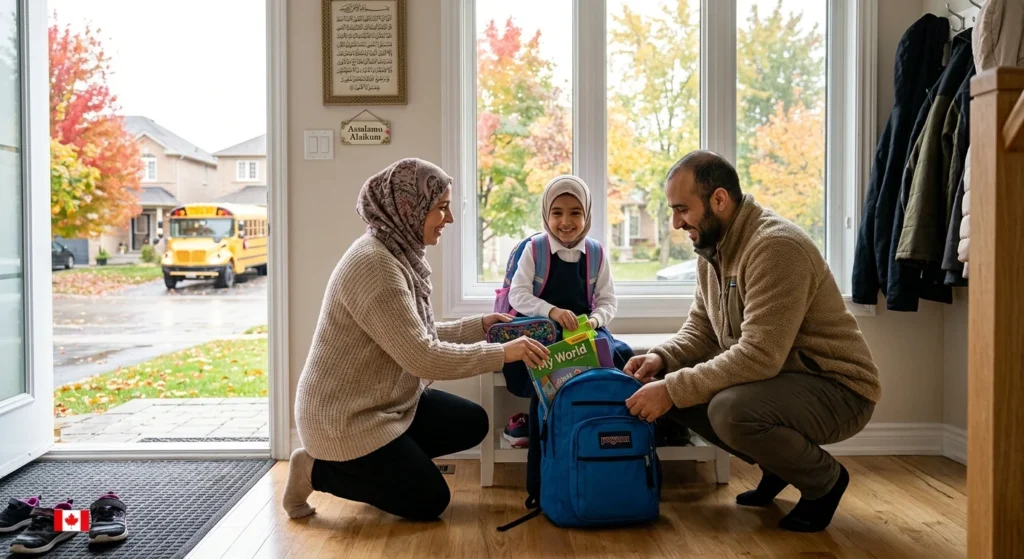
Starting school in a new country brings excitement, questions, and sometimes uncertainty. For many Muslim families, the goal is not only academic success but also raising children who remain confident in their faith and respectful of the diverse communities around them. These Muslim Parenting Tips for the Canadian School System are designed to help parents create that balance without feeling overwhelmed.
Canada’s schools welcome students from many cultures, languages, and religions. That diversity creates wonderful learning opportunities, but it also means Muslim parents may need to take a more active role in supporting their children’s educational journey. Small, consistent efforts at home often make the biggest difference over time.
Understanding the Canadian School System as a Muslim Parent
Canada’s education system encourages inclusion, critical thinking, and active participation. While each province manages its own curriculum, most schools share similar values of respect, equality, and community involvement.
Parents are generally expected to stay engaged throughout the school year. Attending parent-teacher conferences, reading school newsletters, and responding to teacher emails are all part of building a positive partnership.
If you’re new to Canada, don’t worry if everything feels unfamiliar at first. Many schools have settlement workers or multilingual staff who can explain school procedures and answer questions.
Add province-specific examples (Ontario, Alberta, British Columbia) and explain differences between public, Catholic, and private schools.
Why Muslim Parenting Looks Different in a Canadian School Environment
Every family wants their children to feel accepted while staying true to their values. For Muslim parents in Canada, this often means helping children navigate two worlds with confidence.
Children may have classmates from dozens of different backgrounds. They might be asked questions about fasting, prayer, or why they celebrate Eid. These moments can become opportunities to build confidence rather than sources of anxiety.
At home, regular conversations about Islamic values help children understand that respecting others does not require giving up their own identity.
One experienced educator once observed that children who openly understand their own beliefs often answer classmates’ questions more calmly. Confidence usually grows from knowledge, not memorized responses.
Include guidance for immigrant families adjusting to Canadian culture while preserving Islamic identity.
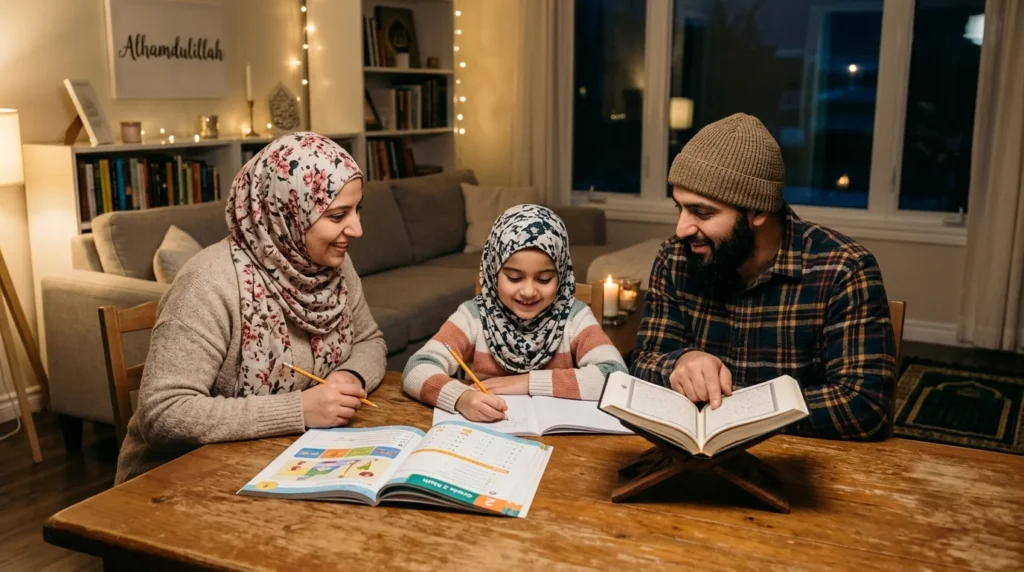
Build Strong Communication With Teachers and School Staff
Teachers appreciate parents who communicate early and respectfully. Introducing yourself at the beginning of the school year creates a foundation of trust.
If your child observes Ramadan, requires halal meal considerations, or may need time for Eid celebrations, inform the teacher before these events arrive. Most schools appreciate advance notice because it allows them to plan appropriately.
Parent-teacher meetings are also valuable opportunities. Rather than discussing only grades, ask about friendships, classroom participation, and emotional well-being.
Discuss Religious Accommodations Early
Simple conversations prevent misunderstandings. Explain your child’s needs clearly while remaining open to collaborative solutions.
Stay Involved Throughout the School Year
Read school updates regularly and respond when necessary. Children often perform better when they know home and school are working together.
Attend Parent-Teacher Meetings With Clear Goals
Prepare two or three questions before each meeting. This helps conversations stay focused and productive.
Include sample email templates and practical communication tips.
Help Your Child Balance School Success and Islamic Values
Academic achievement and strong faith do not compete with each other. In many families, they strengthen one another.
Create predictable daily routines that include homework, family meals, prayer, and enough sleep. Children usually thrive when expectations remain consistent.
Good character matters just as much as good grades. Encourage honesty, kindness, patience, and respect for teachers and classmates. These qualities benefit children wherever they go.
Some parents find that even fifteen minutes of meaningful family conversation each evening helps children process their school experiences.
Establish Daily Family Routines
Consistency reduces stress and helps children manage responsibilities more independently.
Encourage Good Character at School
Remind children that representing Islam includes showing kindness, fairness, and respect to everyone.
Balance Homework, Worship, and Rest
Avoid overloading schedules. Children need time to learn, worship, play, and simply relax.
Add printable routine examples for different age groups.
Prepare Your Child for Ramadan, Eid, and Religious Observances at School
Ramadan can be exciting for children, but school routines continue as usual.
Talk with teachers before Ramadan begins so they understand if your child may experience lower energy levels during certain parts of the day. Younger children who are not fasting may still enjoy participating in family traditions.
Explain Eid celebrations to teachers if your child will be absent. Many educators appreciate learning about cultural and religious celebrations represented in their classrooms.
Talking to Teachers Before Ramadan
A brief conversation or email is often enough.
Managing Energy During School Hours
Encourage healthy sleep habits and nutritious meals during non-fasting hours.
Explaining Eid Celebrations
Children often enjoy sharing simple facts about Eid with classmates if they feel comfortable.
Expansion Note: Include advice for physical education classes and exam periods during Ramadan.
Teach Children How to Respond to Questions About Islam
Curiosity from classmates is common. Most questions come from genuine interest rather than negativity.
Practice simple, age-appropriate answers at home. For example, if someone asks why Muslims pray, a child can explain that prayer helps them remember Allah and develop gratitude.
Confidence grows gradually. Children do not need perfect answers-they only need to feel comfortable being themselves.
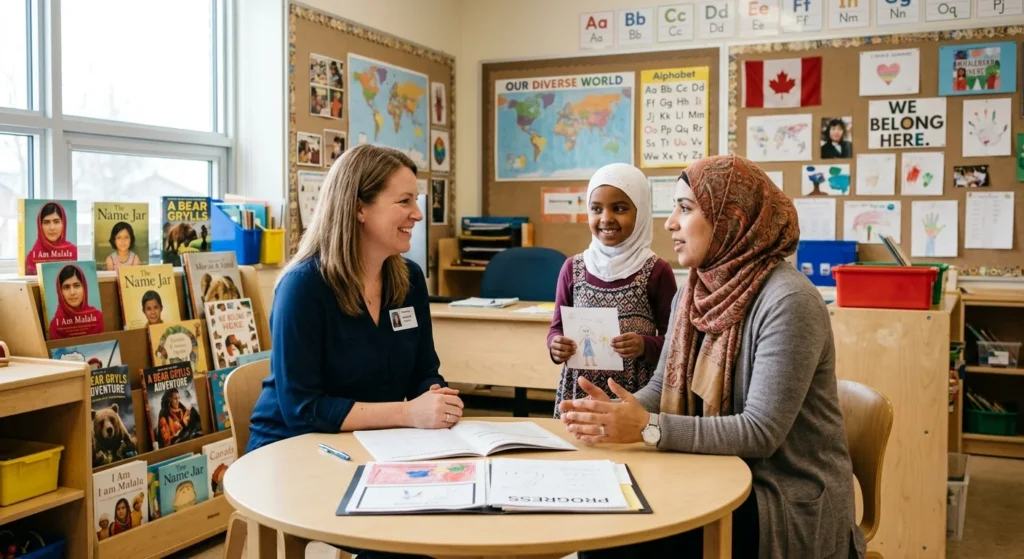
Encourage Respectful Conversations
Teach children to answer politely while respecting different beliefs.
Practice Simple Responses
Short explanations often work best.
Build Self-Confidence
Praise effort instead of perfection.
Expansion Note: Include conversation examples for different age groups.
Recognize and Address Bullying or Islamophobia Early
Most Canadian schools work hard to create safe learning environments. However, bullying can still occur.
Pay attention to changes in your child’s behaviour. Reluctance to attend school, sudden anxiety, or withdrawing from friends may indicate something is wrong.
If concerns arise, contact teachers promptly and document important conversations. Early intervention usually leads to better outcomes.
Signs Your Child May Need Support
Changes in mood, sleep, or academic performance deserve attention.
Working With the School
Stay calm and solution-focused during meetings.
Teaching Emotional Resilience
Help children understand that hurtful behaviour reflects the bully’s choices-not their own worth.
Add school reporting procedures and available community resources.
Support Learning Beyond the Classroom
Learning continues after the school day ends.
Reading together, discussing current events, and encouraging thoughtful questions strengthen both academic skills and confidence. Children enjoy learning when curiosity is welcomed.
Many Muslim families also include regular Quran study and Islamic learning as part of their weekly routine. Even a few consistent sessions each week can build lasting habits.
Healthy screen-time boundaries also matter. Technology supports learning best when used intentionally rather than constantly.
Read Together Daily
Books encourage language development and critical thinking.
Encourage Questions
Children learn more when they feel safe asking questions.
Include Islamic Learning
Regular Quran study complements school education and supports character development.
Recommend age-appropriate educational resources.
Common Mistakes Muslim Parents Should Avoid
Every parent makes mistakes. The goal is improvement, not perfection.
Some families wait until problems appear before contacting teachers. Others become so focused on grades that emotional well-being receives less attention.
Comparing siblings or classmates can also reduce motivation. Every child develops at a different pace.
Finally, avoid assuming children will naturally understand Islamic values without discussion. Regular conversations matter.
Include real-life scenarios and practical alternatives.
Practical Muslim Parenting Tips for Everyday School Life
Small daily habits often create the biggest long-term results.
- Start mornings with calm routines instead of rushing.
- Encourage children to ask questions about school experiences.
- Review homework without completing it for them.
- Celebrate effort alongside achievement.
- Maintain open family conversations during meals.
- Keep communication respectful when discussing school concerns.
- Make time each week for Quran reading and family reflection.
- Encourage children to build friendships based on kindness and respect.
These simple habits help children feel supported both academically and spiritually.
Add printable weekly checklist.
Frequently Asked Questions
How can Muslim parents support their children in Canadian schools?
Stay involved in school activities, communicate with teachers regularly, encourage good study habits, and reinforce Islamic values through daily family routines.
Can Muslim students request religious accommodations at school?
Yes. Many Canadian schools are willing to discuss reasonable accommodations related to religious observances, dietary needs, or important Islamic celebrations.
How should parents prepare children for Ramadan during school?
Inform teachers before Ramadan begins, maintain healthy sleep routines, and encourage children to communicate if they need support during the school day.
What should parents do if their child experiences bullying?
Speak with your child calmly, document incidents, contact the school promptly, and work collaboratively with teachers and administrators to resolve the issue.
How can families balance academics with Islamic education?
Establish a consistent schedule that includes schoolwork, Quran learning, prayer, family time, and rest. Regular routines are easier to maintain than occasional intensive sessions.
Final Thoughts
Raising children in Canada’s diverse school system is both rewarding and challenging. With open communication, thoughtful planning, and steady encouragement, Muslim parents can help their children grow into confident learners who respect others while remaining proud of their faith.
Progress rarely happens overnight. Some weeks will feel easier than others, and that’s perfectly normal. Small, consistent efforts-whether through family conversations, school involvement, or regular Islamic learning-often have the greatest long-term impact.
If you’re looking for additional support, consider connecting your child with trusted Islamic educational programs or local community resources that complement their school experience while strengthening their understanding of Islam.