
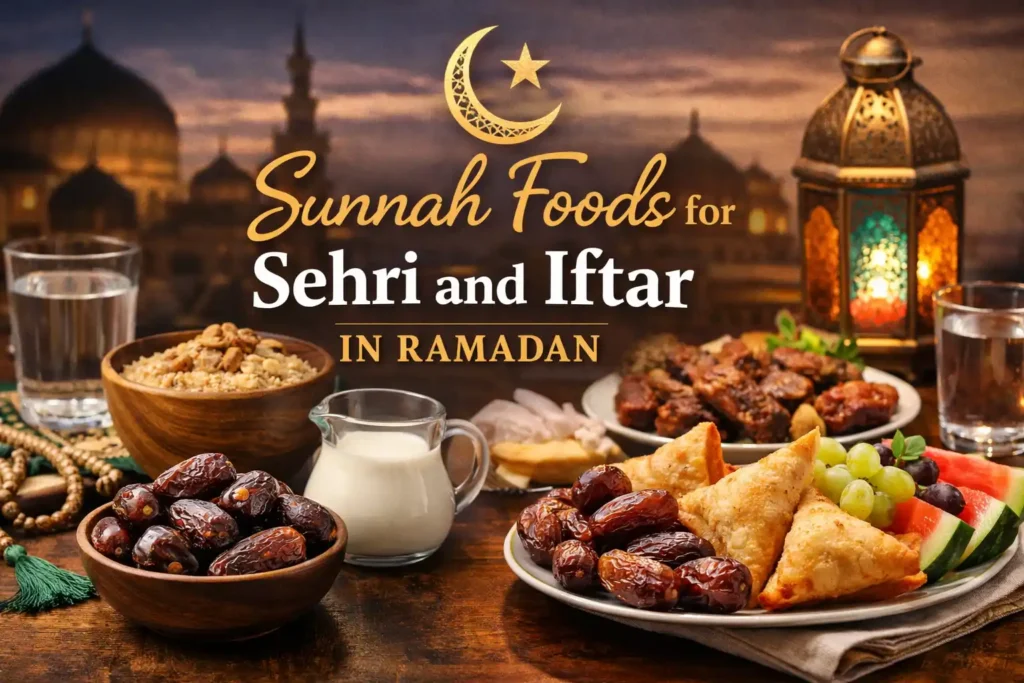
Ramadan is a sacred spiritual journey filled with obedience and devotion. During which Muslims strive to follow the commands of Allah by walking in the footsteps of our beloved Prophet Muhammad (SAW). The fasts we observe become truly meaningful only when every action we perform reflects the Sunnah of the Prophet (SAW). Whether it is a major act of worship or a seemingly small deed, such as eating at Sehri or breaking the fast at Iftar, each action holds immense value when done according to his teachings.
When we choose the favourite food of our beloved Prophet (SAW), we are not just nourishing our bodies. We are reviving his Sunnah, strengthening our connection with him, and earning immense spiritual reward.
These blessed foods carry wisdom, balance, and mercy, benefiting both the heart and the body.
In this guide, we will lovingly explore the Sunnah foods for Sehri and Iftar, and discover the beloved foods of the Prophet (SAW).
Sunnah Foods for Sehri
Sehri (Suhoor) is the pre-fasting meal taken before dawn, and it plays a vital role in sustaining a believer throughout the day of fasting. Performing Sehri is one of the beloved Sunnahs of the Prophet Muhammad (SAW), and he strongly encouraged Muslims not to skip it, even if it consists of only a few bites or sips of water.
The Messenger of Allah (SAW) said:
“Take Suhoor, for indeed there is blessing in it.”
(Sahih Bukhari 1923, Sahih Muslim 1095)
The Prophet (SAW) preferred to have a light meal before Sehri. Here are some recommended Sunnah foods for Sehri that follow his guidance:
- Dates
- Barley (Jau)
- Milk
- Honey
- Whole grains
Sunnah Practices During Sehri
- Eat moderately – Do not overeat.
- Drink plenty of water to stay hydrated.
- Delay Sehri until just before Fajr, as advised by the Prophet (SAW).
Sunnah Foods for Iftar
Iftar is the meal for breaking the fast. It should be light yet nourishing, enough to restore hydration and revive the body’s energy after a day of fasting.
The Messenger of Allah (SAW) said:
“When one of you is fasting, he should break his fast with dates; but if he cannot get any, then (he should break his fast) with water, for water is purifying.”
(Sunan Abu Dawood, 2355)
This Hadith highlights that having a light meal for Iftar is not only in accordance with the Sunnah but also beneficial for the body, supporting digestion, energy, and overall health. Here are some recommended Sunnah Foods for Iftar, which are favourites of the Prophet (SAW).
- Dates
- Water
- Soup
- Fruits
- Barley-based or Whole-grain Dishes
- Roasted meat
- Vinegar and olives
Sunnah Eating Habits in Iftar
- Break your fast immediately with dates and water before praying Maghrib.
- Eat moderately and avoid overeating after long hours.
- Maintain balanced nutrition to support energy for Taraweeh prayers.
Final Thoughts
Eating these foods in Ramadan is more than tradition—it is following the Sunnah and inviting barakah into every meal. The Prophet (SAW) encouraged foods that energize and hydrate the body for fasting, support digestion and overall health, and fill our meals with blessings and mercy. By choosing these Sunnah foods for Sehri and Iftar, we nourish not just the body, but the soul and spirit as well.