
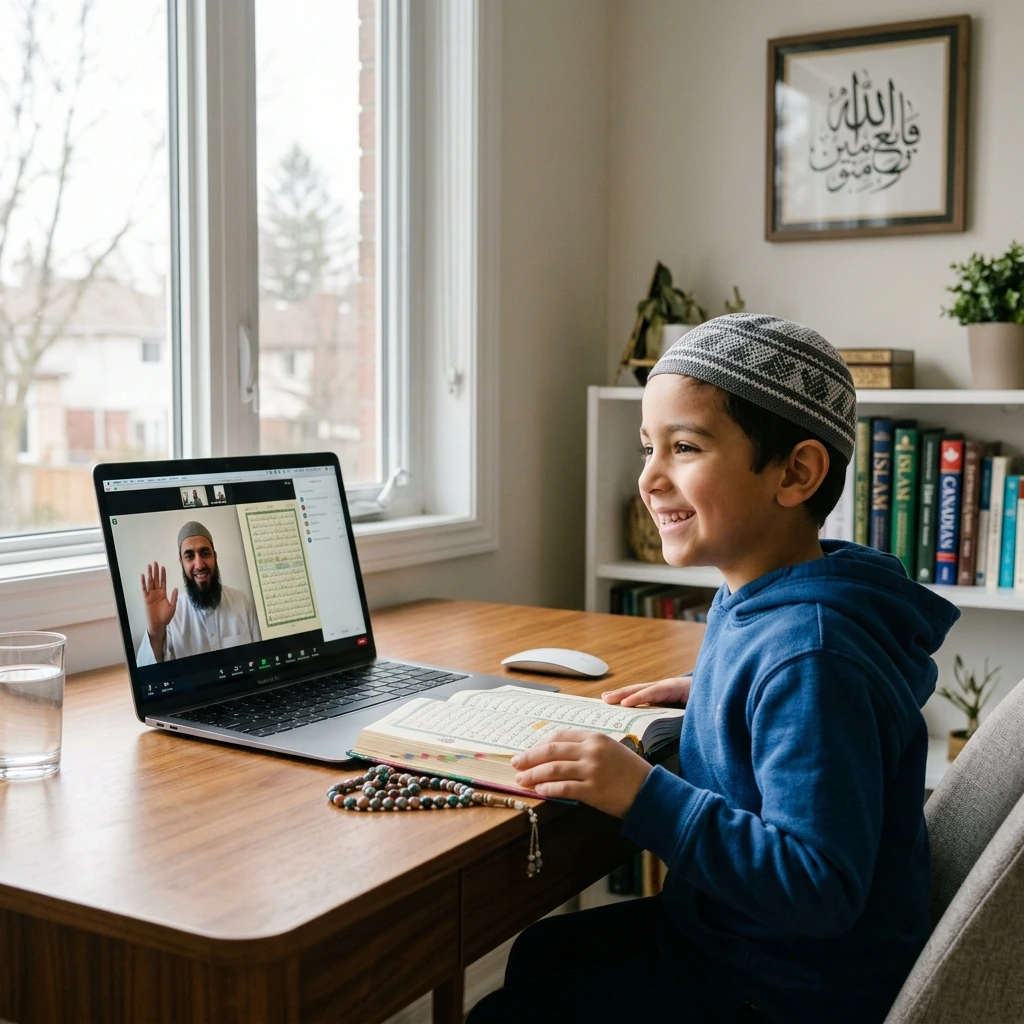
Choosing a Quran teacher for your child isn’t just another item to tick off a parenting checklist. It’s a decision that can shape how your child feels about learning the Quran for years to come. That’s why many families are now exploring online Quran classes Canada-they offer flexibility, personal attention, and access to experienced teachers without the need to travel.
Still, having more choices can make the decision feel harder. One academy highlights its teaching methods, another focuses on affordability, and a third promises fast results. So, where do you begin?
The truth is, every child learns a little differently. One child may enjoy a structured lesson with clear routines, while another opens up with a teacher who keeps things conversational and encouraging. There’s no single formula, and that’s perfectly okay.
This guide is designed to help you look beyond the marketing. We’ll explore the qualities that truly matter, the questions worth asking, and the signs that you’ve found a teacher who can support your child’s learning journey with care and consistency.
Why More Families Are Choosing Online Quran Classes in Canada
A decade ago, many parents preferred local Quran classes simply because that was the familiar option. Today, things have changed. Online learning has become part of everyday life, and for many Canadian families, it simply makes sense.
Convenience is often the first reason parents mention. Between school, homework, sports, and family commitments, fitting another weekly trip into the schedule isn’t always easy. Learning from home removes that extra travel time, making it easier to stay consistent.
One parent shared something that stands out. Their son used to arrive at evening classes tired after school and hockey practice. Once lessons moved online, he seemed more relaxed. He’d grab his Quran, log in from the dining table, and start class without the stress of rushing across town. Sometimes, it’s the small changes that make the biggest difference.
Accessibility is another major advantage.
Canada is a large country, and not every community has access to qualified Quran teachers nearby. Families living in smaller towns or rural areas may have very limited options. Online learning changes that completely, giving parents access to experienced teachers from different parts of the world.
That wider choice also means you’re more likely to find a teacher whose style matches your child’s personality-not just someone who’s available locally.
Another reason parents appreciate online learning is the opportunity for individual attention. In many one-on-one lessons, the teacher can slow down when a child struggles with a particular letter or move ahead when they’re ready. There’s no pressure to keep pace with a classroom.
And honestly, that can be reassuring.
Children often learn better when they don’t feel they’re being compared with others. A comfortable environment (especially one they’re already familiar with) can help them focus on learning instead of worrying about making mistakes.
Technology has helped, too. Video platforms, digital whiteboards, and interactive resources have made online lessons much more engaging than many people expected. Of course, the occasional internet hiccup still happens-we’ve all experienced that-but it’s usually a brief interruption rather than a major obstacle.
That said, technology is only a tool.
The quality of the learning experience still depends on the teacher. A patient, knowledgeable teacher who knows how to connect with children will always have a greater impact than the newest software or the fanciest virtual classroom.
What Makes a Good Online Quran Teacher for Kids?
Parents often begin by looking at qualifications, and that’s a good starting point. But after years of working with children, many experienced educators will tell you the same thing: knowledge and teaching ability aren’t always the same.
The best teachers combine both.
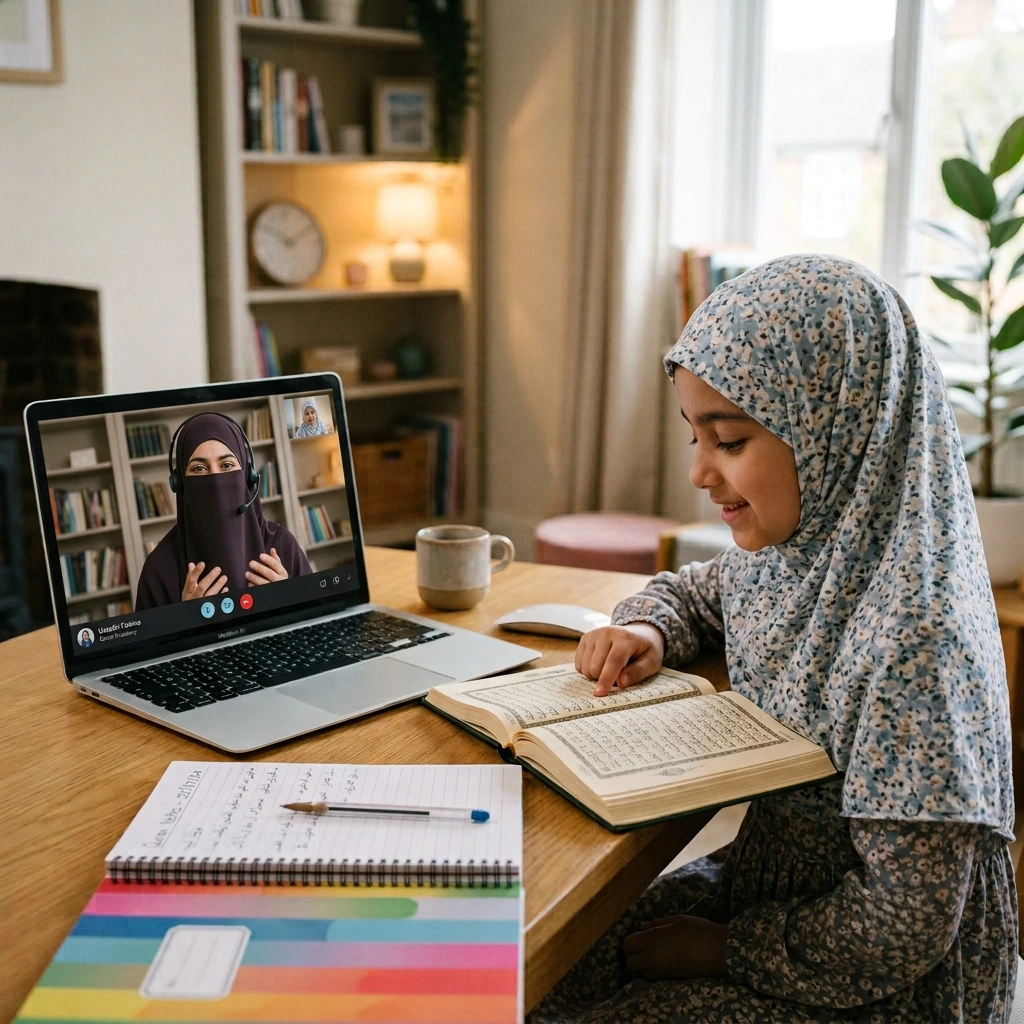
Strong Quran and Tajweed Qualifications
A good Quran teacher should have a solid understanding of Quran recitation and Tajweed. Children usually develop pronunciation habits early, so learning correctly from the beginning makes future progress much smoother.
Formal certification or structured Islamic education is certainly valuable. It shows the teacher has invested time in developing their knowledge.
Still, qualifications don’t tell the whole story.
Think of it this way: someone can know a subject extremely well but struggle to explain it to a young learner. Teaching is its own skill, and it’s one that grows through experience.
Experience Teaching Children
Teaching children requires a different approach than teaching adults.
Young learners are naturally curious, but their attention can shift quickly. One moment they’re fully engaged, and the next they’re distracted by a pet walking into the room or a favorite toy sitting nearby. (Parents will probably smile at that because it’s familiar.)
Experienced teachers expect these moments.
Instead of becoming frustrated, they gently guide the child’s attention back to the lesson. They understand that patience often teaches more effectively than constant correction.
A family once described how their daughter’s first teacher corrected nearly every mistake immediately. She became nervous and spoke less during lessons. Later, they found another teacher who celebrated small improvements before offering corrections. Within a few weeks, she was volunteering to read aloud.
Sometimes, confidence grows before skill does-and that’s completely normal.
Clear Communication Skills
A knowledgeable teacher should also know how to explain things simply.
Children shouldn’t feel overwhelmed by long explanations or unfamiliar terminology. Good teachers break lessons into manageable steps, checking regularly to make sure the child understands before moving forward.
They also encourage questions.
When children know it’s okay to ask, “Can you explain that again?” they’re much more likely to stay engaged. Learning becomes a conversation rather than a lecture.
Patience, Encouragement, and a Positive Teaching Style
Every child learns at their own pace.
Some quickly master Arabic pronunciation, while others need extra practice with certain sounds. Neither approach is “better.” They’re simply different.
An encouraging teacher recognizes that progress isn’t always perfectly straight. Some weeks children improve quickly. Other weeks, they seem to repeat the same mistakes. That’s part of learning.
Positive reinforcement makes a real difference.
Simple comments like, “That was much clearer than last week,” or “You’re improving,” can motivate children far more than constant criticism. Over time, those encouraging moments build confidence-and confident children are often more willing to keep practicing.
Of course, encouragement doesn’t mean lowering expectations.
A good teacher balances kindness with structure. Lessons should feel welcoming, but they should also have clear goals. Children benefit when they know what’s expected while feeling supported every step of the way.
By the end of a few weeks, many parents notice subtle changes. Their child starts looking forward to class, practices without being reminded quite as often, or proudly recites a newly learned surah at home.
Those moments may seem small, but they’re often signs that the teacher is doing something right.
Questions Every Parent Should Ask Before Enrolling
Choosing an online Quran teacher doesn’t have to feel overwhelming. In fact, asking a handful of thoughtful questions can tell you far more than scrolling through a website or reading a list of features.
You’re not trying to find a “perfect” teacher-because, realistically, there isn’t one. You’re looking for someone who understands children, teaches with sincerity, and helps your child enjoy learning while making steady progress.
Is the Teacher Certified?
It’s perfectly reasonable to ask about a teacher’s qualifications.
Have they studied Quran recitation and Tajweed through a recognized institution? Do they have experience teaching children? Have they worked with beginners as well as more advanced students?
These questions matter because a strong educational background usually reflects structured learning.
That said, don’t stop there.
A teacher may have impressive certificates on the wall but still struggle to explain lessons to a seven-year-old. On the other hand, someone with years of practical teaching experience often knows exactly how to make difficult concepts feel simple.
It’s really the combination of knowledge and teaching ability that makes the difference.
Are Trial Classes Available?
If there’s one piece of advice many experienced parents would give, it’s this: never skip the trial lesson.
A website can tell you about qualifications. Reviews can tell you about other families’ experiences. But a trial class shows you how the teacher actually teaches.
Watch how they greet your child. Do they smile? Do they speak calmly? Do they encourage questions?
Little things matter.
One father mentioned that after a trial lesson, his daughter said, “I wasn’t scared to read today.” That short sentence told him more than any brochure could.
During the lesson, notice whether the teacher adjusts the pace when your child hesitates. Do they offer encouragement before correcting mistakes? Those small interactions often reveal a great deal about their teaching style.
And don’t worry if your child seems a bit shy at first. That’s completely normal. What you’re looking for is whether the teacher helps them become more comfortable as the lesson continues.
How Is Student Progress Measured?
Learning the Quran isn’t about finishing pages as quickly as possible.
Real progress happens gradually. Good teachers understand that and take time to monitor each child’s development.
Ask how they measure improvement.
Will they provide regular feedback? Do they explain which Tajweed rules need more practice? Will parents receive updates every few weeks?
The answers don’t need to be complicated.
Sometimes, a short conversation after class is enough to keep parents informed. Other teachers use simple progress reports or monthly reviews. What’s important is that communication stays consistent.
After all, it’s much easier to support your child at home when you understand exactly what they’re working on.
What Teaching Resources Are Used?
Technology has made online learning much more interactive than many people expected.
Teachers may use digital whiteboards, screen sharing, pronunciation exercises, visual presentations, or interactive reading activities. These tools can certainly make lessons more engaging.
Still, they’re only tools.
A child usually remembers a patient explanation far longer than an animated presentation.
Ask whether lesson materials match your child’s age and current level. Younger learners often respond well to colorful visual aids and short activities, while older students may benefit from structured reading plans and regular revision sessions.
The best resources support learning without becoming a distraction.
Features to Look for in Online Quran Classes Canada
Once you’ve found a teacher you like, it’s worth looking at how the overall program is organized.
Sometimes it’s the small details-flexible scheduling, class size, communication-that make learning easier for both children and parents.
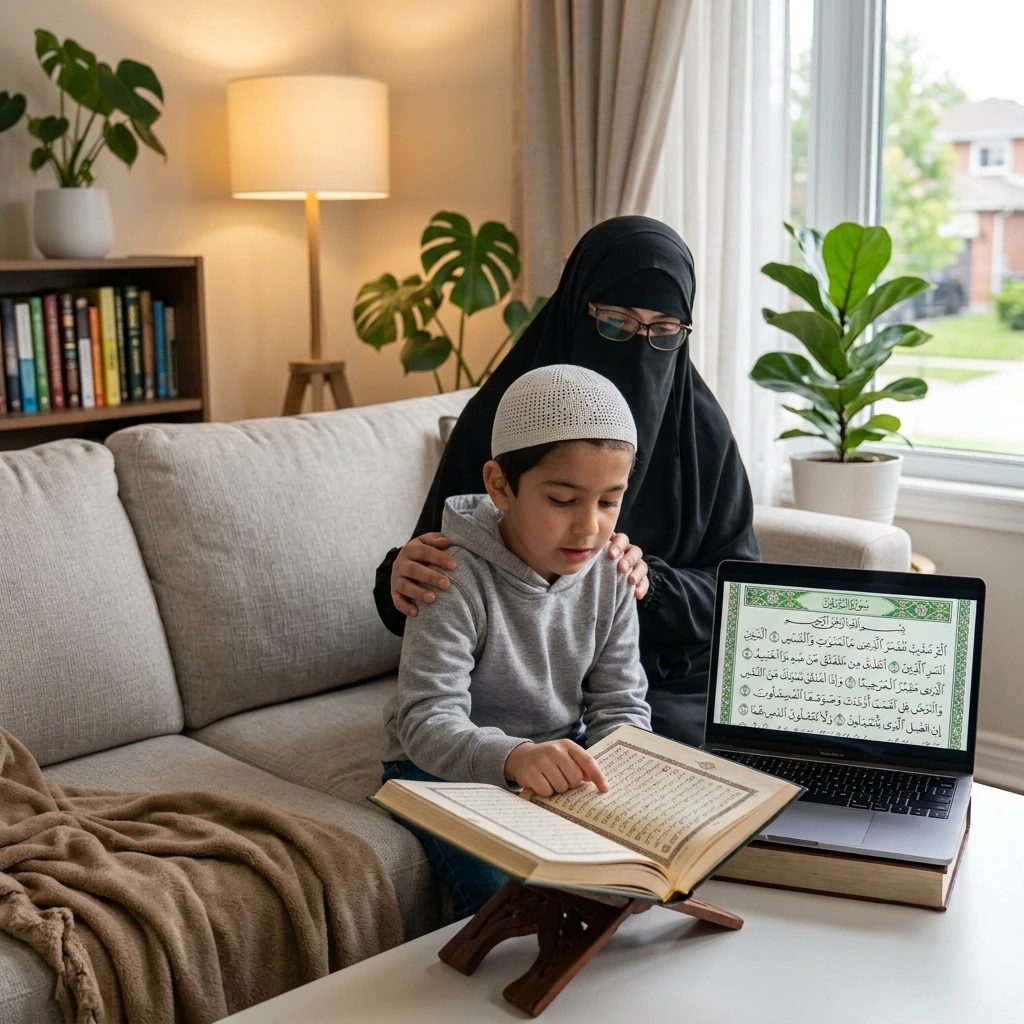
One-on-One Quran Classes
Many families choose individual lessons because they offer personalized attention from start to finish.
Instead of waiting for other students to finish reading, your child receives immediate guidance throughout the lesson. If pronunciation needs extra practice, the teacher can spend more time on it without worrying about slowing down an entire class.
That’s one of the biggest advantages of one-on-one learning.
A mother once shared that her son used to stay quiet in group lessons because he worried about making mistakes in front of others. After switching to private sessions, he began reading more confidently within a month. Sometimes children simply need a little more space to learn.
Flexible Scheduling Across Canadian Time Zones
Life can be busy.
School assignments, sports practices, family events, and everyday responsibilities don’t always leave much room for fixed schedules.
A quality online academy understands this. Many offer morning, evening, or weekend lessons so families can choose times that fit naturally into their routines.
That flexibility often makes consistency much easier.
And consistency matters.
Two regular lessons every week are usually far more beneficial than several lessons followed by long breaks.
Female Quran Teachers (When Preferred)
Every family has its own preferences, and many academies respect that by offering both male and female teachers.
Some parents feel more comfortable choosing a female teacher, particularly for younger children or daughters. Others focus primarily on teaching style and experience.
Neither approach is right or wrong.
The important thing is finding someone who creates a respectful, encouraging learning environment where your child feels comfortable asking questions and participating confidently.
Safe and Secure Online Learning Environment
Parents naturally want to know that online lessons take place in a safe and professional setting.
Reputable academies usually use secure video platforms, maintain clear communication policies, and encourage appropriate parental involvement-especially for younger students.
It’s also helpful when parents know exactly how lessons are conducted.
Can they observe classes if needed? How are scheduling changes communicated? Are teachers punctual and professional?
These practical details may seem small at first, but together they build trust. And trust is an important part of any educational experience.
Signs That an Online Quran Teacher Is the Right Fit
Even after you’ve chosen a teacher, it’s worth checking in from time to time.
Children grow. Their confidence changes. Their learning needs evolve.
A teacher who is the right fit will usually leave small but noticeable signs along the way.
Your Child Looks Forward to Lessons
Not every lesson will be exciting-that’s true of any type of education.
But overall, your child should feel positive about attending class.
Maybe they remind you that lesson time is coming. Maybe they open their Quran before you’re even asked. Perhaps they start sharing something new they learned during dinner.
Those little moments often say more than test scores ever could.
Improvement in Tajweed and Recitation
Progress isn’t always dramatic.
Sometimes it’s simply hearing your child pronounce a letter more accurately than they did last month. Other times, it’s noticing that they pause in the right places while reciting.
Small improvements deserve recognition because they add up over time.
Good teachers celebrate those milestones while continuing to guide students toward the next goal.
Consistent Attendance and Motivation
Children who enjoy learning usually need fewer reminders to attend class.
Of course, everyone has days when they’re tired or distracted. That’s completely normal.
What matters is the overall pattern.
If your child generally joins lessons with a positive attitude and participates willingly, it’s a strong sign that the teacher has built a supportive learning relationship.
Positive Parent-Teacher Communication
The best learning experiences involve teamwork.
Teachers should feel comfortable discussing progress honestly, and parents should feel comfortable asking questions without hesitation.
Sometimes a teacher might suggest spending just ten minutes reviewing a particular surah during the week. Another might recommend practicing one difficult Arabic sound before the next lesson.
These conversations don’t have to be long.
But they do help everyone stay focused on the same goal: helping the child grow steadily, confidently, and with a genuine appreciation for learning the Quran.
Common Mistakes Parents Should Avoid
Finding the right Quran teacher isn’t something most parents do often, so it’s completely normal to feel unsure at first. With so many academies advertising similar services, it’s easy to focus on the wrong details.
A little extra research now can save a lot of disappointment later.
Choosing Based Only on Price
Every family has a budget, and that’s understandable. Cost is an important consideration-but it shouldn’t be the only one.
Sometimes the least expensive option ends up costing more in the long run if your child loses interest or doesn’t receive the support they need.
Think about value instead of just price.
A teacher who prepares lessons, gives thoughtful feedback, communicates with parents, and keeps children motivated often provides a much better learning experience. Those things may not appear on a pricing page, but they matter.
One parent shared that they initially chose the cheapest academy they could find. After a few months, their son wasn’t making much progress and had started avoiding lessons. They eventually switched to another teacher who cost a little more, and within weeks, the difference was noticeable. He became more engaged, asked questions, and even practiced on his own without being reminded every day.
That doesn’t mean expensive always equals better. It simply means quality deserves careful attention.
Ignoring Teaching Experience
It’s easy to assume that someone with strong Quranic knowledge will automatically be an excellent teacher.
Sometimes that’s true.
Sometimes it isn’t.
Teaching children requires patience, flexibility, and the ability to explain the same concept in different ways. A child who doesn’t understand something today might understand it perfectly after hearing a different explanation tomorrow.
Experienced teachers recognize those moments.
Instead of repeating the same instruction again and again, they’ll adjust their approach. Maybe they’ll use a simple example. Maybe they’ll slow the pace a little. Sometimes they’ll even turn the lesson into a short activity just to regain the child’s attention.
Those adjustments come with experience, and they make a real difference.
Skipping the Trial Class
This is probably one of the most common mistakes.
Parents often read positive reviews, receive recommendations from friends, or compare websites before making a decision. All of that is helpful-but none of it replaces seeing a teacher in action.
A trial lesson gives you something much more valuable than marketing.
You can observe how the teacher welcomes your child, explains new ideas, responds to mistakes, and keeps the lesson moving naturally.
And here’s something people don’t always think about…
You’re not only evaluating the teacher. You’re also watching your child’s reactions.
Do they seem relaxed? Curious? Comfortable enough to ask questions?
Those little signs often tell you whether the teacher is the right fit.
Not Considering Your Child’s Learning Style
Every child brings a different personality into the classroom.
Some enjoy routine. Others need variety. Some ask dozens of questions, while others prefer listening quietly before speaking.
There’s nothing unusual about any of that.
A good teacher adapts to the student instead of expecting every child to learn exactly the same way.
Parents can help by paying attention after lessons.
Is your child talking about what they learned? Are they becoming more confident? Do they seem proud when they complete a new lesson?
If the answer is yes, chances are the learning environment is working well.
The goal isn’t simply to finish a textbook. It’s to help your child build a positive, lifelong relationship with the Quran.
Why Personalized Quran Learning Benefits Children
One reason online learning has become so popular is that it allows lessons to be tailored to each student.
Instead of following the pace of an entire classroom, children receive guidance that’s based on their own strengths, challenges, and learning speed.
That can make a surprisingly big difference.
Better Focus During Lessons
Anyone who’s spent time with young children knows how quickly their attention can wander.
A bird outside the window, a ringing doorbell, or even a favorite toy across the room can suddenly become far more interesting than the lesson.
In one-on-one classes, teachers can respond to those moments more easily.
They’ll pause for a second, gently bring the child’s attention back, and continue without disrupting the flow of the lesson.
Because the teacher’s attention isn’t divided among several students, children often stay engaged for longer periods.
Learning at an Individual Pace
Some children master Arabic pronunciation quite quickly.
Others need a little more repetition before certain sounds become natural.
Neither approach is better. It’s simply how learning works.
Personalized lessons remove the pressure of trying to keep up with a group.
If a child needs extra practice with one Tajweed rule, the teacher can spend more time on it. If they’re progressing quickly, lessons can move forward without unnecessary delays.
That flexibility often helps children feel more confident because they’re learning at a pace that feels manageable.
Building a Strong Teacher-Student Relationship
Learning becomes much easier when children trust their teacher.
As lessons continue over weeks and months, teachers begin to understand each student’s personality. They notice what motivates them, which explanations work best, and when a child needs a little extra encouragement.
Children notice this too.
They become more comfortable asking questions, admitting when they don’t understand something, and trying again after making mistakes.
One teacher recalled a student who barely spoke during the first few lessons. A few months later, he eagerly volunteered to recite new surahs at the beginning of every class. Nothing dramatic had changed. He had simply become comfortable enough to believe in himself.
Those quiet moments of growth are often the most meaningful.
Encouraging Long-Term Consistency
Parents sometimes hope to see rapid improvement, especially during the first few weeks.
But Quran learning isn’t a race.
The children who make the strongest long-term progress are usually the ones who attend regularly, revise consistently, and enjoy the learning process.
Some weeks progress feels obvious.
Other weeks, it may seem slower. That’s perfectly normal.
What matters is that learning continues.
A child who confidently recites several surahs today probably began with the Arabic alphabet not very long ago. Looking back, it’s often easier to see just how much progress has actually been made.
Consistency, patience, and encouragement-those three things tend to achieve far more than rushing from one lesson to the next.
And perhaps that’s one of the biggest lessons for parents as well. Small steps may not feel dramatic, but over time, they often lead to remarkable results.
Frequently Asked Questions
What is the best age for a child to start online Quran classes?
There’s no universal “right” age because every child develops differently. Many families introduce Quran learning between the ages of four and seven, but readiness matters much more than a specific number.
If your child can listen for short periods, follow simple instructions, and shows curiosity about learning, they’re probably ready to begin. Even if lessons start slowly (and they often do), that’s perfectly fine. Building confidence is just as important as building knowledge.
Can beginners learn the Quran effectively through online classes?
Yes, they can.
Many children begin with Noorani Qaida before moving on to Quran recitation and Tajweed. A well-structured online program introduces one concept at a time, allowing children to build a strong foundation instead of feeling overwhelmed.
Parents are sometimes surprised by how naturally children adapt to online learning. After the first few lessons, logging into class often becomes just another part of the weekly routine.
How many Quran classes should my child take each week?
It depends on your child’s age, schedule, and learning goals.
For most families, two to four lessons each week offer a healthy balance between steady progress and enough time for revision. If your child is working toward Quran memorization (Hifz), additional lessons may be appropriate.
The key isn’t having the busiest schedule.
It’s showing up consistently. A child who attends regularly and practices a little between lessons will often make better progress than someone with a packed schedule but irregular attendance.
How can parents support their child’s Quran learning at home?
You don’t have to be an expert in Tajweed to make a positive difference.
Simple habits often have the biggest impact. Listen while your child recites, encourage regular revision, celebrate small improvements, and create a quiet space for lessons whenever possible.
One family made Quran revision part of their evening routine. After dinner, they spent just ten minutes listening to their daughter recite what she’d learned that week. It wasn’t a long session, but it became something everyone looked forward to. Those small routines often become lasting memories.
Children also notice your interest.
When you ask, “What did you learn today?” instead of “Did you finish your lesson?” you’re showing that the learning itself matters-not just completing another class.
What should I expect during a trial Quran lesson?
Think of a trial lesson as a conversation rather than a test.
The teacher will usually begin by understanding your child’s current level. Some children already know Arabic letters, while others are complete beginners, and that’s completely okay.
During the lesson, notice how the teacher communicates.
Do they explain things clearly? Are they patient when your child hesitates? Do they encourage effort as well as correct mistakes?
Afterward, ask your child a simple question: “How did you feel?”
Their answer may tell you more than anything else.
Final Thoughts
Choosing an online Quran teacher isn’t really about finding the academy with the biggest advertisements or the longest list of features.
It’s about finding someone your child trusts.
A teacher who explains patiently, encourages consistently, and genuinely enjoys helping children learn can leave an impact that lasts far beyond individual lessons. Those positive experiences often shape how children feel about Quran learning as they grow older.
So, take your time.
Attend trial classes. Ask thoughtful questions. Compare teaching styles-not just prices. And don’t worry if it takes a little while to find the right fit. It’s a decision worth making carefully.
Remember, meaningful progress doesn’t usually happen overnight.
It happens one lesson at a time.
One corrected pronunciation. One newly memorized verse. One encouraging conversation after class.
Those small moments build confidence, and confidence often leads to consistency.
If you’re currently exploring online Quran classes for your child, consider starting with a trial lesson. It’s a simple, practical way to see how the teacher connects with your child before making a long-term commitment.
With the right guidance, a supportive learning environment, and regular practice, your child can develop not only strong Quran recitation skills but also a lasting appreciation for learning. And really, that’s something every parent hopes for.