
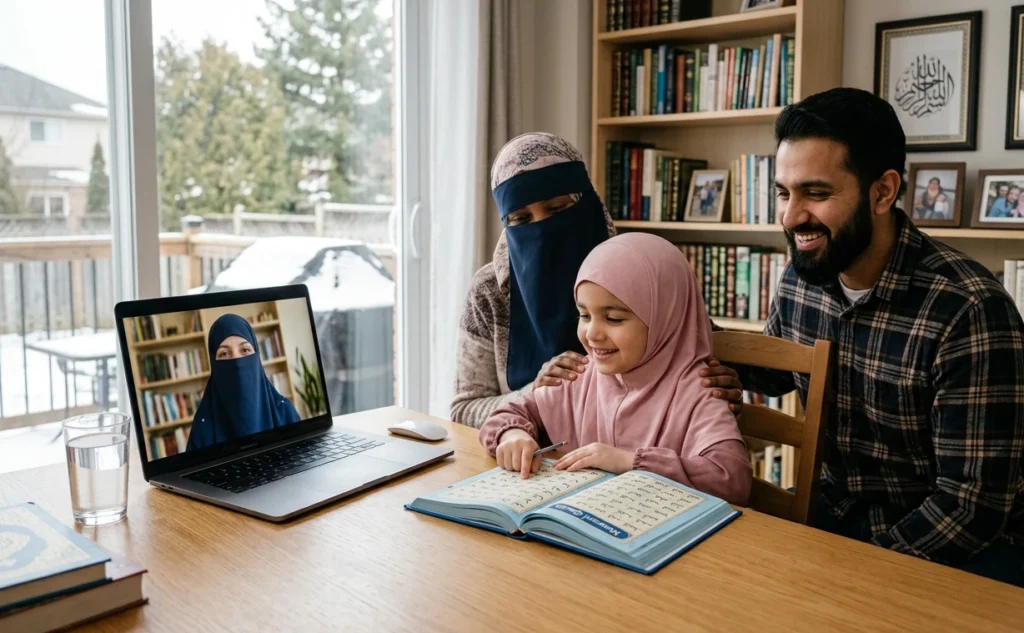
For many Muslim parents, helping a child begin learning the Quran is one of those milestones that feels both exciting and a little daunting. You want to get it right. At the same time, it’s natural to wonder if you’re starting too early-or waiting too long.
If you’ve been searching for a Quran teacher for kids Toronto, chances are you’re looking for more than a class. You’re probably asking bigger questions: Is my child ready? Will they enjoy learning? How do I choose the right teacher? Those are thoughtful questions, and honestly, most parents ask them at some point.
The reassuring news is that there isn’t a single “correct” age that works for every child. Some children are eager to learn at four, while others really come into their own a year or two later. What matters most isn’t the number on the birthday cake. It’s whether your child is ready to learn in a way that feels positive and encouraging.
This guide is here to help you make that decision with confidence. We’ll look at child readiness, common learning stages, and practical advice that fits the reality of family life in Canada.
Why Parents Ask About the Right Age to Start Quran Classes
Every parent wants to give their child a strong foundation. When it comes to Quran education, though, there’s often a surprising amount of advice-sometimes too much.
One relative says, “Start as early as possible.” Another suggests waiting until school routines settle down. Friends share what worked for their own children, and before long, it’s easy to wonder whether you’re making the right choice.
Here’s the thing: every family sees a slightly different picture because every child is different.
A Quran teacher once shared a simple observation after years of teaching young learners. Two children enrolled in the same class, both five years old. One couldn’t wait to answer every question. The other barely spoke during the first month. Six months later? The quieter child had found their confidence and was progressing beautifully. That’s a good reminder that early enthusiasm isn’t the only measure of success.
Rather than focusing only on age, experienced teachers usually look for signs of readiness.
Can a child pay attention for a short lesson? Are they curious about learning? Can they follow simple instructions? Those small indicators often matter much more than whether they’re exactly five or exactly six.
It’s a bit like learning to ride a bicycle. Some children are ready with a few encouraging words. Others need a little more time-and that’s perfectly okay.
Family routines matter, too.
For many Canadian parents, weekdays can feel like a puzzle. School, homework, sports, family dinners, weekend activities… somehow everything has to fit together. Adding Quran lessons should support your family’s rhythm, not create unnecessary stress.
Children usually learn best when lessons become part of everyday life instead of feeling like another obligation.
What Is the Best Age to Start Learning the Quran?
Parents often ask this question expecting a precise number.
The honest answer? There isn’t one.
That said, many experienced educators find that children between five and seven years old are often ready to begin structured Quran lessons. By this age, many have developed the concentration, listening skills, and language abilities needed for regular classes.
But that’s only a guideline-not a deadline.
Some children are genuinely ready before five. Others benefit from waiting until they’re a little older. Neither path is better. They’re simply different.
Ages 3-4: Building Familiarity
Children in this age group are naturally curious about the world around them.
They’re listening, watching, repeating words, and absorbing far more than adults sometimes realize.
Formal lessons usually aren’t necessary yet. Instead, this stage is about helping children become comfortable with hearing and seeing the Quran in everyday life.
Simple activities can make a meaningful difference:
- Listening to beautiful Quran recitation at home
- Learning short daily duas together
- Memorizing brief surahs through repetition
- Becoming familiar with Arabic sounds
One parent described how her four-year-old quietly repeated part of Surah Al-Fatihah while playing with building blocks. Nobody had asked him to memorize it. He’d simply heard it often enough that the words became familiar. Children have a remarkable way of learning when there’s no pressure.
At this age, enjoyment matters more than achievement.
If learning feels warm and encouraging now, children are much more likely to approach future lessons with confidence.
Ages 5-7: Beginning Structured Quran Lessons
For many families, this is when formal Quran education begins.
Children are often ready to recognize Arabic letters, participate in guided activities, and gradually develop reading skills. Many also enjoy having a routine of their own. (It’s amazing how seriously some five-year-olds take having “homework.”)
Most beginners start with Noorani Qaida or another foundational reading method before moving on to Quran recitation.
During this stage, children learn much more than letters.
They’re learning patience.
They’re learning consistency.
And they’re discovering that making mistakes isn’t something to fear.
Progress can sometimes seem slower than parents expect during the first few months. That’s completely normal.
Imagine building a house. You don’t notice much while the foundation is being laid, yet it’s the part everything else depends on. Quran learning works in much the same way.
A patient teacher will focus on accuracy before speed, helping children build confidence one lesson at a time.
Ages 8 and Above: It’s Never Too Late
Some parents worry they’ve missed the “ideal” window.
Fortunately, that’s rarely the case.
Children begin Online Quran learning later for all sorts of reasons. Families move to a new city. School schedules become busy. Parents spend time looking for the right teacher instead of choosing the first available option.
Life happens.
Older beginners often bring strengths that younger children are still developing. They may concentrate for longer, ask thoughtful questions, and become independent during practice much sooner.
One experienced tutor mentioned teaching two siblings. The younger child started at five, while the older sibling began at nine. Surprisingly, the older student caught up faster than expected because they were able to focus during lessons and practice independently at home.
Stories like that aren’t unusual.
Every child’s learning journey has its own pace, and comparing siblings-or classmates-rarely tells the full story.
Every Child Learns Differently
Perhaps the most important thing for parents to remember is this: children don’t follow identical timelines.
One child may confidently recognize Arabic letters after a few weeks.
Another may need several months before everything starts to click.
Neither child is failing.
Some children love reading aloud. Others prefer listening first and joining in once they feel comfortable. Some ask endless questions (“Why is this letter different?”), while others quietly observe before surprising everyone with how much they’ve learned.
Good teachers expect these differences.
Instead of trying to fit every child into the same teaching style, they adjust lessons to match the learner sitting in front of them. Sometimes that means slowing down. Sometimes it means adding games or visual activities. Occasionally, it simply means offering a little extra encouragement.
Parents play an equally important role.
Children notice the little things. A smile after class. A few encouraging words in the car on the way home. Celebrating a newly learned surah at dinner. Those moments may seem small, but they often become the memories that shape a child’s relationship with Quran learning.
In the end, that’s really the goal.
Not finishing first.
Not memorizing the fastest.
But helping your child develop a lasting connection with the Quran-one lesson, one page, and one small success at a time.
Signs Your Child Is Ready for Quran Classes
It’s easy to focus on age because it’s something we can measure. Readiness, though, is a little different. It’s something you notice over time.
A child doesn’t need to sit perfectly still or know the Arabic alphabet before starting Quran lessons. In fact, most beginners don’t. What matters is whether they’re beginning to show the habits that make learning enjoyable and sustainable.
If you’re unsure, don’t worry. Many parents feel the same way.
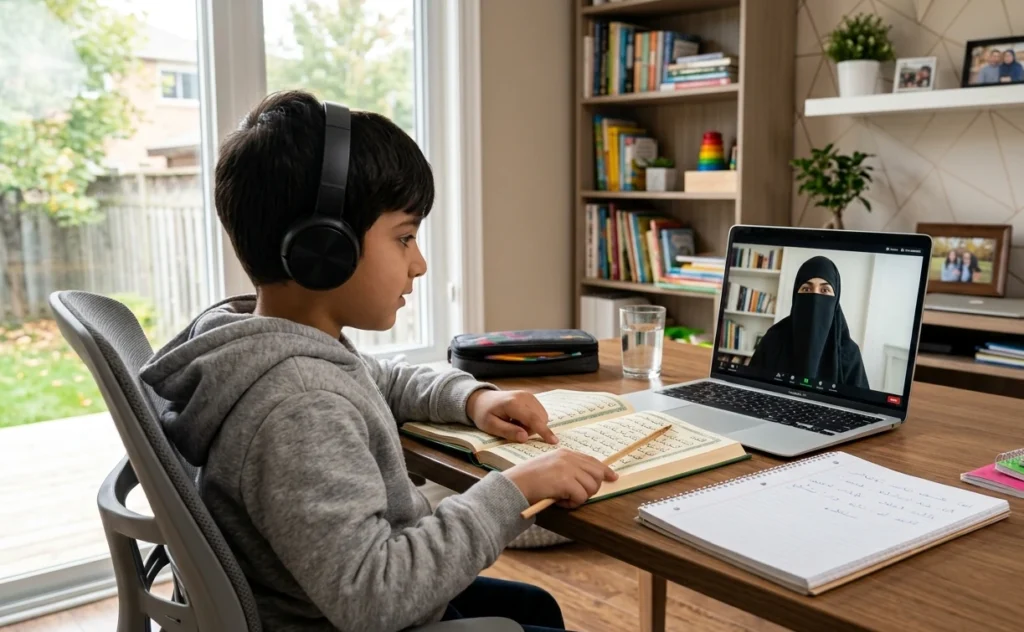
They Can Focus for Short Periods
Young children aren’t expected to concentrate for an hour-and they shouldn’t have to.
If your child can listen to a story, finish a simple activity, or stay engaged for 15 to 20 minutes, that’s often a good sign they’re ready for beginner Quran lessons.
Of course, there will be days when they’re distracted. Maybe they didn’t sleep well. Maybe they’re excited about something that happened at school. That’s just childhood.
One teacher laughed while recalling a student who spent five minutes telling everyone about losing a tooth before reading a single Arabic letter. By the end of the lesson, though, he was completely focused. Children have a way of surprising us.
A patient teacher expects little moments like these. They’re part of teaching, not interruptions to it.
They Enjoy Learning New Things
Curiosity is one of the strongest signs that a child is ready.
Maybe your son points to Arabic writing on a mosque wall and asks what it says. Perhaps your daughter enjoys repeating a short surah after hearing it during prayer. Those small moments matter.
Children don’t always announce that they’re ready to learn. More often, they show it through simple questions and quiet interest.
Parents can encourage this naturally.
Listening to Quran recitation during a drive, reading an Islamic story before bedtime, or talking about the meaning of a short dua can all help build familiarity. None of it needs to feel like a formal lesson.
Sometimes the best learning happens when children don’t even realize they’re learning.
They Can Follow Simple Instructions
Most beginner Quran classes involve straightforward tasks.
Open your book.
Repeat after me.
Point to this letter.
Read this line together.
If your child can follow two or three simple instructions without becoming overwhelmed, they’re likely ready to benefit from structured lessons.
That doesn’t mean everything will go smoothly every time.
Some days they’ll mix up letters they’ve already learned. Other days they’ll remember something that seemed impossible just a week earlier. Progress has a funny way of working like that.
Your Family Has a Consistent Routine
Children generally feel more secure when they know what to expect.
Whether lessons happen after school, on Saturday mornings, or in the evening after dinner, having a regular routine makes it easier for learning to become a habit.
For many Canadian families, life is busy enough already.
School projects, hockey practice, swimming lessons, work schedules- it all adds up. Trying to squeeze Quran classes into an already packed calendar can leave everyone feeling rushed.
A manageable routine is usually better than an ambitious one that lasts only a few weeks.
Even two lessons each week, combined with a few minutes of review at home, can produce steady progress over time.
Benefits of Starting Quran Education Early
Beginning Quran education at a young age isn’t about getting ahead of anyone else.
It’s about giving children enough time to develop confidence, good learning habits, and a genuine connection with the Quran.
Those things grow gradually. They can’t really be rushed.
Building a Strong Reading Foundation
Every skill begins with the basics.
Children first learn letters before words. Then words before sentences. Quran reading follows the same pattern.
Starting with foundational resources such as Noorani Qaida helps children recognize Arabic letters, understand pronunciation, and read with greater confidence later on.
Parents sometimes wish their child could move faster.
But experienced teachers know that a careful beginning often saves months of frustration later. A strong foundation makes everything else easier.
Developing Good Tajweed Habits
Learning proper pronunciation from the beginning can make a noticeable difference.
Instead of correcting long-standing habits years later, children gradually develop accurate pronunciation as they learn.
It’s a little like learning to hold a pencil correctly. Once a comfortable habit is formed, it becomes second nature.
Of course, older students can absolutely learn Tajweed too. Good teaching works at every age. Early exposure simply gives children a head start.
Creating a Love for Islamic Learning
This may be the most valuable benefit of all.
Children are much more likely to continue learning when their early experiences are positive.
A welcoming teacher.
Lessons that match their pace.
Parents who celebrate effort instead of expecting perfection.
Those simple things leave a lasting impression.
One family shared that their daughter couldn’t wait for her weekly Quran class-not because she loved homework, but because her teacher always began each lesson by asking about her week. It only took a minute or two, yet it made the child feel seen and valued.
Little moments often become big memories.
Encouraging Discipline and Consistency
Regular Quran lessons gently introduce children to responsibility.
They learn to attend class on time, practice between lessons, and work steadily toward small goals.
Not every week feels exciting.
Sometimes progress is slow. Sometimes life gets busy. That’s normal.
Over months-and eventually years-those small routines become habits that often carry into school, work, and other areas of life as well.
How to Choose the Right Quran Teacher for Kids in Toronto
Once you’ve decided your child is ready, the next step is choosing the right teacher.
Families searching for a Quran teacher for kids Toronto will find plenty of options, from local Islamic centres to private tutors and online academies.
The challenge isn’t finding a teacher.
It’s finding the right teacher.
Qualifications certainly matter, but they’re only part of the picture. A wonderful teacher combines knowledge with patience, kindness, and an understanding of how children learn.
Look for Experience Teaching Children
Teaching children requires a different approach than teaching adults.
Young learners need encouragement. They ask unexpected questions. They sometimes lose focus halfway through a lesson.
Experienced teachers understand this.
Rather than becoming frustrated, they adjust the lesson, change the activity, or simply pause for a moment before continuing.
That flexibility often makes a tremendous difference.
Choose Someone with Strong Tajweed Knowledge
Children deserve to learn accurate pronunciation from the beginning.
A qualified teacher should have a solid understanding of Tajweed and be able to explain concepts in a way that’s appropriate for the child’s age.
Parents don’t need to know every Tajweed rule themselves.
But it’s perfectly reasonable to ask about a teacher’s qualifications, teaching experience, and learning approach before enrolling.
Patience Matters More Than Perfection
Children learn best when they aren’t afraid to make mistakes.
A patient teacher doesn’t simply point out errors. They explain, encourage, and give children another opportunity to try.
Think back to your own childhood.
Most of us remember the teachers who made us feel confident-not the ones who expected perfection.
Quran education should feel the same.
Interactive Lessons Keep Children Interested
Children rarely learn well by sitting quietly for long periods.
Good lessons usually include a mix of reading, repetition, conversation, review activities, and positive feedback.
Even online Quran classes Canada can be highly engaging when teachers know how to involve children throughout the lesson instead of simply asking them to read page after page.
Energy matters.
Enthusiasm matters.
Children notice both.
Ask Practical Questions Before Enrolling
Before choosing a teacher, don’t hesitate to ask a few practical questions.
For example:
- Is a trial lesson available?
- How are beginner students introduced to Quran reading?
- How is progress shared with parents?
- Are lessons adjusted if a child learns more slowly or more quickly than expected?
- What happens if a family needs to reschedule a class?
A thoughtful teacher will usually welcome these conversations.
After all, parents aren’t just choosing a class.
They’re choosing someone who may become an important part of their child’s learning journey for months-or even years.
Online Quran Classes vs. In-Person Learning in Canada
One question comes up again and again: Should my child learn online or attend classes in person?
It’s a fair question. A few years ago, many parents automatically preferred classroom learning. Today, though, online Quran lessons have become a trusted option for thousands of Muslim families across Canada.
The good news? Both approaches can work very well.
The real difference usually isn’t the screen or the classroom. It’s the quality of the teacher, the consistency of the lessons, and whether the learning style suits your child.
Why Many Families Choose Online Quran Classes
For busy families, online learning often makes everyday life a little easier.
There’s no drive across the city after work. No rushing through dinner to make it to class on time. Instead, children can log in from home, settle into a familiar space, and focus on learning.
That convenience isn’t just about saving time. It also helps families stay consistent, and consistency is what really moves learning forward.
Many parents also appreciate that online classes make it possible to learn from experienced teachers who may live in another city-or even another country.
Other advantages include:
- Flexible scheduling around school and family activities
- One-to-one attention during lessons
- A comfortable learning environment at home
- Easier communication between parents and teachers
- Fewer missed classes because of travel or weather
One Toronto parent shared something interesting after switching to online lessons. Her son used to spend almost forty minutes commuting to and from class. Once lessons moved online, that extra time became practice time-or sometimes just family time. It was a small change, but it made the weekly routine feel much less stressful.
When In-Person Classes May Be the Better Choice
Of course, online learning isn’t the perfect fit for every child.
Some children simply enjoy being around other learners. They like raising their hands, making friends, and participating in a classroom environment.
If your child learns best through face-to-face interaction, in-person classes may be worth considering.
They can be especially helpful for children who:
- Enjoy group activities
- Stay motivated by learning alongside others
- Focus better outside the home
- Already attend programs at their local mosque or Islamic centre
There’s also something special about becoming part of a local learning community. Friendships formed in Quran classes often continue long after the lesson ends.
Which Option Is Right for Your Family?
There’s no prize for choosing one method over another.
Instead, think about your child’s personality and your family’s routine.
Ask yourself a few simple questions.
- When is my child most alert and ready to learn?
- Will we realistically attend classes every week?
- Does my child prefer individual attention or group learning?
- Which environment feels calm rather than rushed?
Sometimes parents spend weeks comparing different learning formats when the bigger question is much simpler:
“Can we stick with this consistently?”
Usually, the answer to that question points you in the right direction.
How Parents Can Support Their Child’s Quran Learning
Teachers play an important role, but learning doesn’t stop when class ends.
Parents shape the environment where children practice, stay motivated, and gradually build confidence.
The encouraging part? You don’t need to be a Quran teacher yourself to make a real difference.
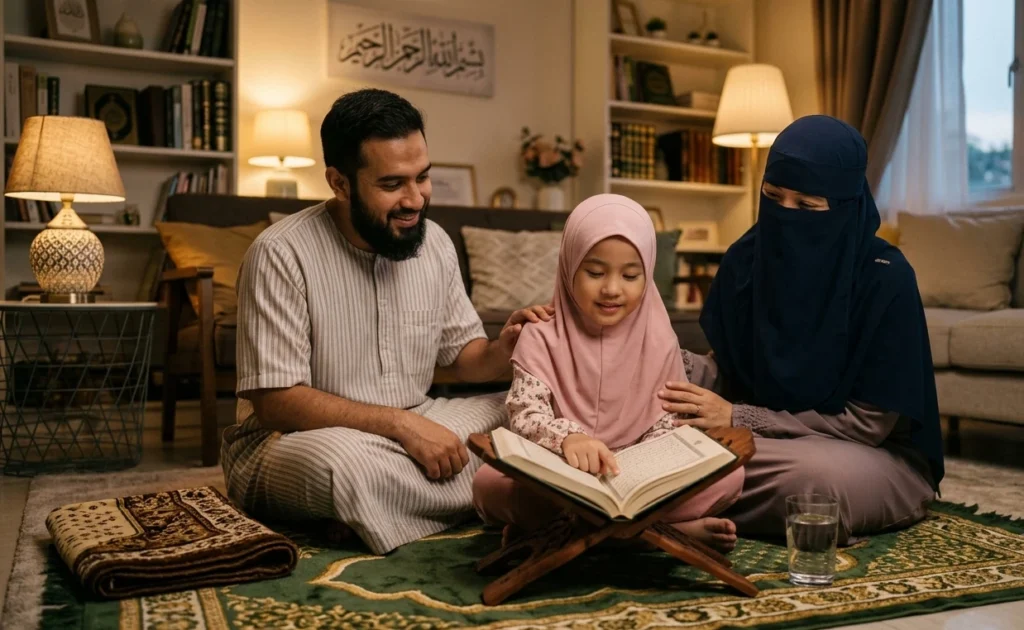
Create a Simple Routine
Children generally do better when learning becomes part of everyday life.
That doesn’t mean setting aside an hour every evening.
In many families, even 10 or 15 minutes of review is enough to reinforce what was covered during class.
Some parents choose after Maghrib. Others prefer Saturday mornings with fewer distractions.
There’s no perfect schedule.
The best routine is simply the one your family can maintain.
Celebrate Small Wins
Progress isn’t always obvious from one lesson to the next.
Sometimes the biggest achievement is remembering yesterday’s letter.
Sometimes it’s reading a difficult word without help.
And sometimes it’s just showing up with a positive attitude after a long day at school.
Those little victories deserve recognition.
One father mentioned that after every Quran lesson, he asked only one question: “What’s one new thing you learned today?”
The conversations were short, but over time his daughter became excited to share her progress instead of worrying about making mistakes.
Children notice what adults celebrate.
If effort receives attention, they’ll usually keep making the effort.
Learn Together Whenever You Can
You don’t have to sit beside your child correcting pronunciation.
Simply showing interest goes a long way.
Ask them to read a few lines they’ve practiced.
Listen to a short surah together.
Encourage them to teach you something they learned that week.
Children often enjoy becoming the “teacher” for a few minutes. It builds confidence-and it usually brings a smile.
Encourage Without Adding Pressure
Every child has slower weeks.
School exams happen.
Families travel.
Children get tired or distracted.
Life doesn’t pause because Quran lessons are scheduled.
That’s why patience matters so much.
Gentle encouragement usually works far better than constant reminders or criticism.
The goal isn’t to finish first.
It’s to help your child develop a relationship with the Quran that lasts well beyond childhood.
Frequently Asked Questions
What is the best age to start Quran classes?
Many experienced educators recommend beginning structured lessons between the ages of five and seven. Still, age is only one factor.
A child who’s interested, able to focus for short periods, and ready to follow simple instructions may be prepared earlier. Others may benefit from waiting a little longer.
Does my child need to know Arabic before starting?
Not at all.
Most beginner programs assume children have no previous knowledge of Arabic.
Lessons usually begin with letter recognition, pronunciation, and foundational reading before moving on to Quran recitation.
How many Quran lessons should my child have each week?
For many families, two or three lessons each week provide a healthy balance.
Combined with a few minutes of practice at home, this schedule often allows children to make steady progress without feeling overwhelmed.
How long should a beginner’s lesson be?
For younger children, around 20 to 40 minutes is usually enough.
As attention spans grow, lessons can gradually become longer.
A good teacher adjusts the pace according to the child rather than following the same structure for everyone.
What if my child loses interest?
It happens more often than parents think.
Sometimes children simply need a short break, a different teaching style, or a little extra encouragement.
Talk with the teacher before assuming your child wants to quit altogether. Small adjustments-a shorter lesson, a new activity, or changing the class time-can make a surprising difference.
Final Thoughts
Every child’s Quran learning journey looks a little different.
Some begin at four. Others at six. Some don’t start until they’re older. None of those paths automatically leads to better results than another.
What’s far more important is creating an environment where children feel supported, encouraged, and excited to keep learning.
Whether you choose online lessons or classroom instruction, take your time when selecting a teacher. Experience matters. Patience matters even more.
If you’re currently looking for a Quran teacher for kids Toronto, don’t focus only on qualifications or location. Look for someone who understands children, communicates well with parents, and creates lessons that build confidence one step at a time.
Years from now, your child probably won’t remember every single lesson.
But they’ll remember how learning the Quran made them feel.
Helping them begin that journey with encouragement, kindness, and consistency may be one of the most meaningful gifts you can give.