
Introduction
Raising Muslim children in Canada is a journey filled with both opportunities and challenges. Many Muslim parents want their children to feel confident in the society they live in while also staying connected to their Islamic identity, values, and family traditions.
For some families, this balance feels natural. For others, it can raise difficult questions. How do we help children fit into Canadian society without losing their connection to Islam? How can parents make faith feel meaningful rather than something children only follow because they are told to?
These are common concerns among Muslim families across Canada. Every household has its own story, but one thing remains true: children need guidance, understanding, and positive experiences to build a strong sense of identity.
A parent once shared that their biggest concern wasn’t whether their child would learn about Islam — it was whether their child would love Islam. That small difference matters. Knowledge is important, but connection is what often stays with children as they grow.
Understanding the Challenges Muslim Parents Face in Canada
Muslim parents in Canada often find themselves balancing different parts of their children’s lives. They want their children to succeed in school, build healthy friendships, and participate confidently in society while still understanding their Islamic values.
Children are influenced by many things around them: teachers, friends, social media, and the communities they spend time in. This isn’t necessarily negative. In fact, exposure to different cultures can help children become more respectful and open-minded.
The important question is: are children also receiving enough support to understand their own beliefs?
Balancing Canadian Culture With Islamic Values
Being Canadian and being Muslim are not opposite identities. Many Muslim children grow up appreciating Canadian values such as kindness, fairness, and respect while also following Islamic teachings.
Parents can help children understand that Islam encourages positive character. Being a good neighbor, helping others, respecting differences, and contributing to society are all qualities that align with Islamic values.
For example, a child may participate in a school community project, make friends from different backgrounds, and still understand the importance of prayer, honesty, and family responsibilities.
Sometimes parents worry that outside influences will weaken their children’s faith. But with the right foundation at home, children can learn how to engage with the world while staying connected to who they are.
Expansion Opportunity:
Add real examples of situations Muslim children experience in Canadian schools, such as questions about fasting, prayer, clothing, or Islamic celebrations.
Helping Children Handle Questions About Their Faith
As children grow older, they naturally become more curious. They may ask questions about their own religion or hear questions from classmates.
“Why do you pray?”
“Why do you fast?”
“Why don’t you do certain things that others do?”
These questions are not always a challenge. Sometimes they are simply a child trying to understand the world around them.
Parents can create a safe environment where children feel comfortable discussing faith. A child who knows they can ask questions at home is more likely to develop confidence instead of confusion.
One mother mentioned that she started having short conversations with her children during car rides. They weren’t formal lessons, just simple discussions about values, choices, and everyday situations. Over time, those small conversations became some of the most meaningful learning moments.
Include common questions children ask about Islam and practical ways parents can respond.
Building a Strong Islamic Identity at Home
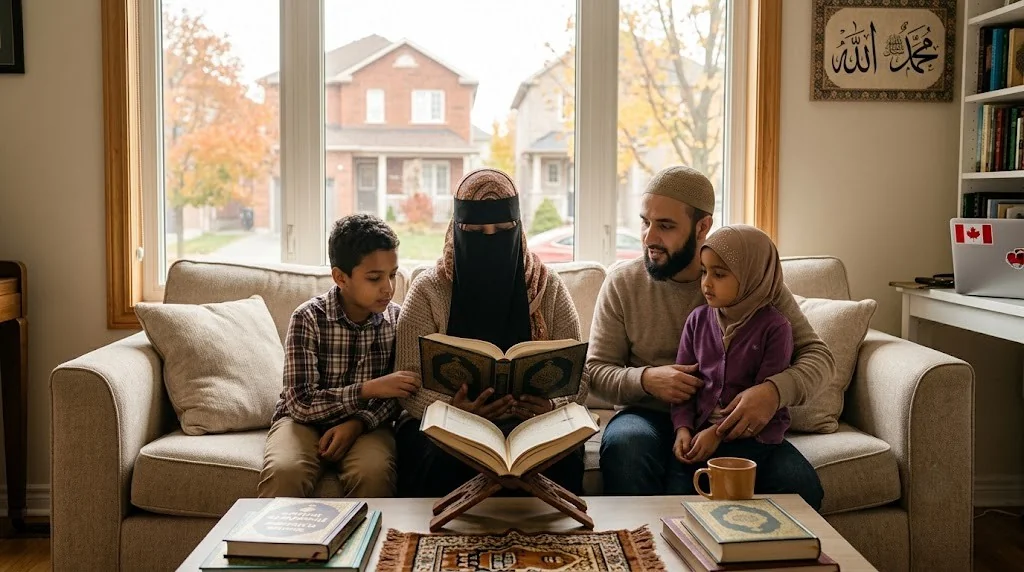
A child’s understanding of Islam often begins with what they experience at home. Daily habits, family conversations, and the behavior they observe from parents all shape their relationship with faith.
Islamic identity isn’t built overnight. It develops through small moments repeated consistently.
A child remembering family Quran time, a parent making dua before a journey, or a conversation about kindness after a difficult day – these simple moments can leave a lasting impact.
Creating Islamic Routines in Everyday Life
Families don’t need complicated routines to strengthen Islamic learning. Sometimes small actions create the strongest connections.
Reading a few verses of the Quran together, discussing an Islamic story, making dua before sleeping, or praying as a family can become meaningful traditions.
The goal is to make Islam feel like a natural part of life, not only a scheduled activity.
A father once explained that his children initially struggled with Quran practice because it felt like another school assignment. He changed the approach by spending a few minutes discussing what they learned and why it mattered. Slowly, their attitude changed.
Consistency often matters more than perfection.
Teaching Islamic Values Through Actions
Children notice what parents do. They learn patience by seeing patience. They learn kindness by experiencing kindness.
A child may forget a long lecture about honesty, but they will remember watching their parents admit a mistake or treat someone respectfully.
Islamic values become stronger when children see them practiced in real situations.
Expansion Opportunity:
Add a practical family routine guide with daily, weekly, and monthly Islamic activities.
The Role of Quran Education in Raising Muslim Kids in Canada
Quran education plays an important role in helping children understand their faith. It provides more than reading skills; it helps children build a relationship with the words, lessons, and guidance of the Quran.
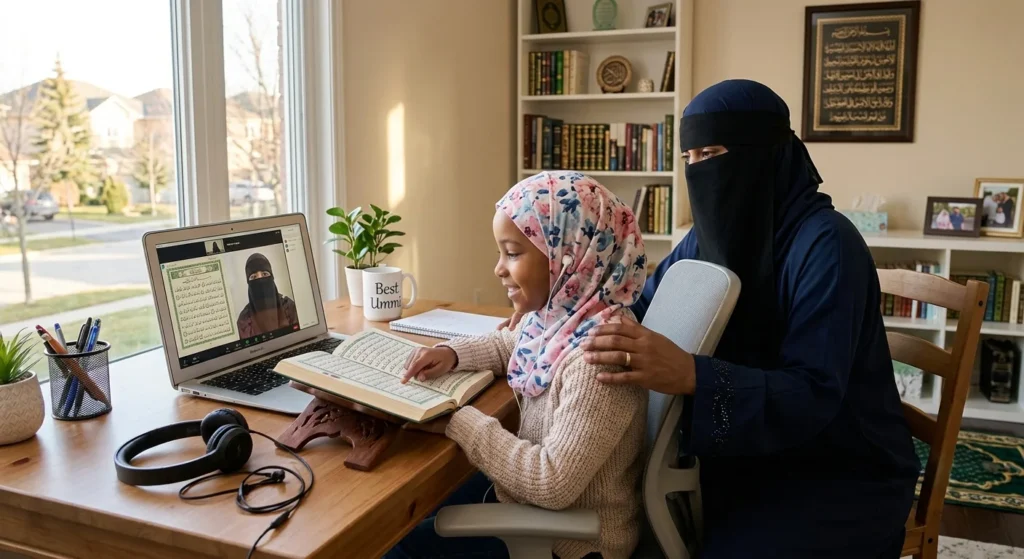
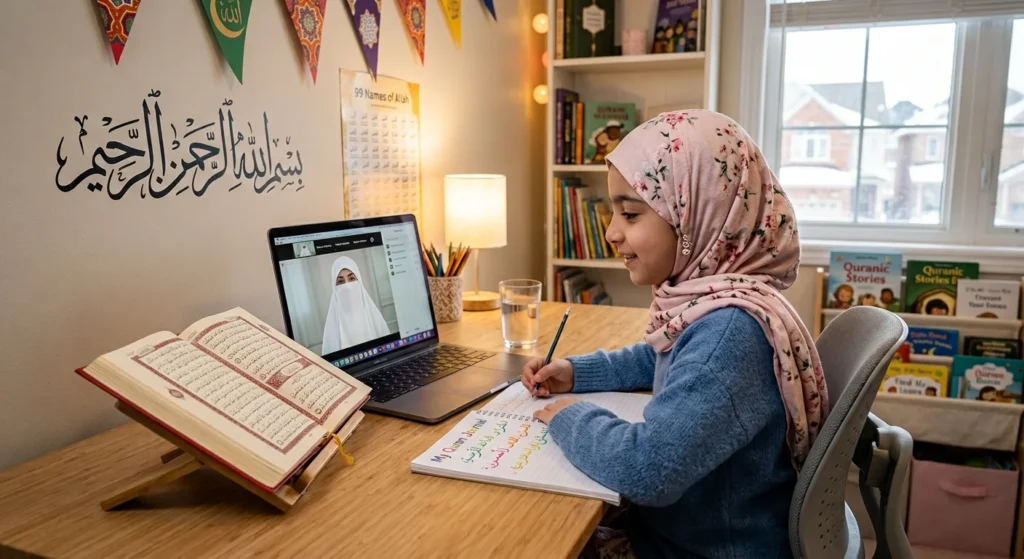
For many families in Canada, managing school schedules, work responsibilities, and family commitments can be challenging. Because of this, many parents explore flexible learning options, including online Quran classes.
Making Quran Learning Engaging for Children
Children learn differently. Some enjoy repetition and memorization, while others respond better to stories, explanations, and interactive learning.
A patient teacher can make a big difference. When children feel encouraged instead of pressured, they are often more willing to participate and improve.
Parents should look for teachers who understand children’s learning needs and create a positive environment.
After all, a child who enjoys learning is more likely to continue learning.
Choosing the Right Islamic Education Support
Choosing a Quran teacher or learning program requires careful consideration. Parents should look for experience, good communication, and teaching methods suitable for children.
It’s also helpful to choose educators who understand the experiences of Muslim families living in Canada. Cultural awareness allows teachers to connect with students more effectively.
A good teacher doesn’t only correct pronunciation. They help students feel comfortable asking questions and growing in their faith.
Add a detailed guide explaining how parents can evaluate Quran teachers and online academies.
Encouraging Children to Feel Proud of Their Muslim Identity
Children need to feel positive about who they are. A strong identity gives them confidence when they interact with different people and environments.
Parents can help by teaching children about Islamic history, traditions, and the contributions Muslims have made throughout history.
Faith becomes more meaningful when children understand the story behind it.
Teaching Children About Their Islamic Heritage
Islamic stories provide valuable lessons about patience, courage, honesty, and compassion.
Children often connect deeply with stories. A young child hearing about the patience of Prophet Ayyub (peace be upon him) may begin understanding how to handle difficulties in their own life.
These lessons help children see Islam as something practical and relevant.
Building Positive Muslim Connections
Community support can make a big difference. Spending time with other Muslim families, attending mosque programs, and participating in Islamic activities help children feel connected.
A child who sees other Muslim children learning, playing, and growing together often feels a stronger sense of belonging.
Community reminds children that their faith is shared by millions of people around the world.
Include examples of Muslim community activities available for Canadian families.
Supporting Muslim Children Through School and Social Life
School is a major part of a child’s life. Parents can prepare children by teaching confidence, communication, and decision-making skills.
The goal isn’t to make children afraid of different environments. Instead, it’s about helping them understand how to make thoughtful choices.
Preparing Children for a Multicultural Environment
Canada’s multicultural environment gives children the chance to meet people from many backgrounds.
Parents can teach children to respect others while also respecting themselves and their own beliefs.
A child who understands their values is usually better prepared to handle different opinions.
Handling Peer Pressure and Identity Challenges
As children grow, they may face situations where they feel pressure to change or hide parts of their identity.
Regular conversations at home can help. Parents don’t always need to provide immediate answers – sometimes listening first is the most helpful thing they can do.
Children need to know they have support when they face challenges.
Add examples of conversations parents can have with teenagers about identity and peer influence.
Practical Tips for Muslim Families in Canada
Strengthening Islamic identity happens through everyday actions. Families can start with simple steps:
- Create regular Quran learning time.
- Encourage children to ask questions about faith.
- Discuss Islamic values through real-life situations.
- Spend time with positive Muslim communities.
- Celebrate Islamic occasions in meaningful ways.
- Show Islamic character through daily actions.
Small steps repeated over time often create the strongest results.
Children may not remember every lesson they receive, but they usually remember how their faith made them feel.
Frequently Asked Questions
![]() How can Muslim parents maintain Islamic identity while living in Canada?
How can Muslim parents maintain Islamic identity while living in Canada?
Parents can maintain Islamic identity by creating a supportive home environment, teaching Islamic values, encouraging Quran learning, and having open conversations about faith.
Can children follow Islamic values while participating in Canadian society?
Yes. Many Muslim children successfully balance their Islamic beliefs with life in Canada by learning respect, confidence, and understanding.
Why is Quran education important for Muslim children?
Quran education helps children strengthen their connection with Islam, improve their understanding of faith, and develop positive spiritual habits.
How can parents make Islamic learning enjoyable?
Parents can make learning enjoyable by choosing supportive teachers, using age-appropriate methods, and connecting lessons to everyday life.
How can Muslim families build stronger community connections?
Families can connect through mosques, Islamic centers, community programs, and friendships with other Muslim families.
Conclusion
Raising Muslim children in Canada is about building confidence, understanding, and a strong connection with faith. Children don’t need to choose between being part of Canadian society and maintaining their Islamic identity.
With supportive parenting, meaningful Islamic education, and positive community connections, children can grow into confident individuals who understand both their faith and the world around them.
Every family’s journey will look different. The important thing is to provide children with knowledge, love, and guidance as they grow.
For families looking to strengthen their children’s Quran learning journey, exploring a trusted Quran education program can be a valuable step toward creating a strong Islamic foundation.