
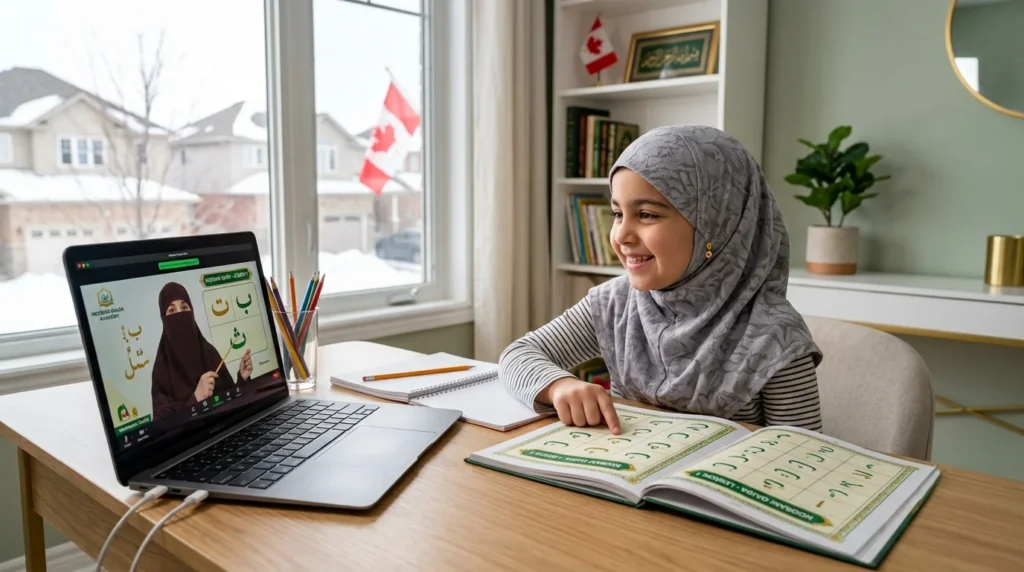
Learning to read the Quran is an important milestone for many Muslim families. For most children, that journey begins with Noorani Qaida for Kids in Canada, a beginner-friendly guide that teaches the Arabic alphabet, pronunciation, and the basic rules needed before reading the Quran confidently.
If you’re a parent wondering where to begin, you’re not alone. Many Canadian families have questions about the right age to start, whether online learning works, and how to choose a qualified teacher. The good news is that with the right approach, children can build a strong foundation while learning at a pace that suits them.
What Is Noorani Qaida and Why Is It Important?
Noorani Qaida is a foundational learning book designed to help beginners read Arabic correctly before moving on to the Quran. Rather than asking children to memorize words immediately, it introduces letters, sounds, and pronunciation step by step.
This gradual approach makes learning less overwhelming. Children first become familiar with individual letters, then learn how letters connect to form words, and eventually practice reading complete Quranic words with greater confidence.
A strong foundation often prevents mistakes that can become difficult to correct later. Just as children usually learn the alphabet before reading full sentences, Noorani Qaida prepares them for Quran reading in a structured way.
Skills Children Learn Through Noorani Qaida
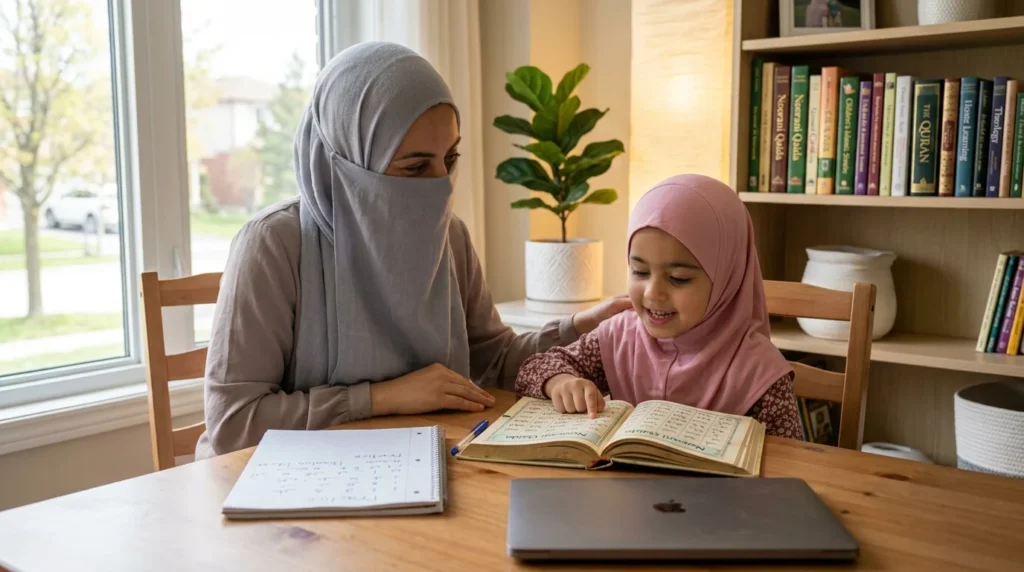
As children progress, they gradually develop several essential skills:
- Recognizing the Arabic alphabet
- Correct pronunciation of letters (Makharij)
- Understanding basic Tajweed principles
- Joining letters into words
- Reading simple Quranic text with confidence
These skills may seem small individually, but together they form the building blocks of fluent Quran reading.
Add examples of lesson progression from the first Arabic letters to complete words.
What Is the Best Age to Start Noorani Qaida?
There is no universal age that fits every child. Many families introduce Noorani Qaida between the ages of four and seven because children are often ready to recognize letters and follow simple instructions during these years.
That said, readiness matters more than age alone. Some younger children show strong interest and concentration, while others benefit from waiting a little longer. Every child develops differently.
Parents can look for simple signs, such as:
- Curiosity about books or Arabic letters
- Ability to focus for 15–20 minutes
- Willingness to repeat sounds and words
- Interest in learning new skills
Even older children who are starting for the first time can make excellent progress with consistent guidance.
Note for expansion: Include age-specific learning expectations for preschoolers, elementary students, and beginners over age ten.
How Canadian Families Can Start Noorani Qaida Lessons
Families today have more learning options than ever before. While local mosques and weekend schools continue to play an important role, many parents now choose online Noorani Qaida classes for kids because they fit busy schedules.
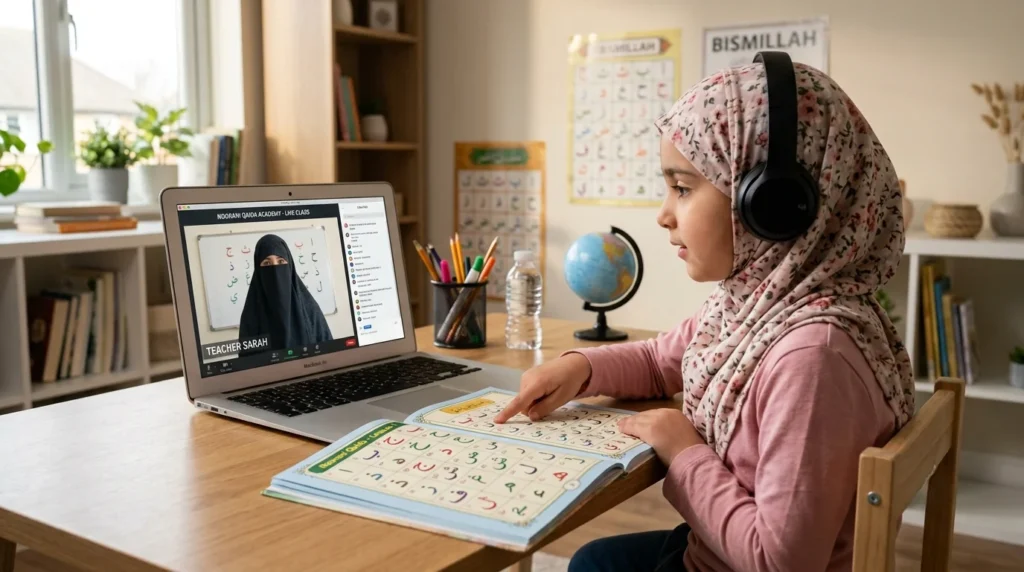
Online lessons allow children to learn from home while receiving personalized attention. This can be especially helpful for families living in areas with limited access to qualified Quran teachers.
Parents should also establish a simple learning routine. Even fifteen minutes of daily revision often produces better results than one long weekly session.
A quiet study space, encouragement, and consistency usually make a noticeable difference over time.
Online Learning vs. Traditional Classes
Both approaches have advantages.
Traditional classes provide face-to-face interaction and opportunities to learn alongside other children.
Online lessons often offer:
- Flexible scheduling
- One-on-one instruction
- Individual learning pace
- Easier access to experienced teachers
- Less travel time for busy families
The best option depends on your child’s learning style and your family’s routine Compare online academies, mosque programs, and private tutors in greater detail.
What Makes a Good Noorani Qaida Teacher for Kids?
Choosing the right teacher can shape a child’s entire learning experience.
A qualified teacher should have strong knowledge of Quran reading and Tajweed while also understanding how children learn. Patience, encouragement, and clear communication are just as important as technical knowledge.
Look for teachers who:
- Explain lessons clearly
- Correct pronunciation gently
- Keep children engaged
- Adapt lessons to different learning speeds
- Provide regular progress updates
Many academies also offer trial lessons. These sessions give parents an opportunity to observe teaching style before making a long-term commitment.
Remember, children learn best when they feel comfortable asking questions and making mistakes without fear.
Include a checklist parents can use when evaluating teachers.
How Long Does It Take to Complete Noorani Qaida?
Completion time varies from one child to another.
Some children finish within six months, while others may take closer to a year. Neither timeline is better. Progress depends on several factors, including lesson frequency, home practice, teacher guidance, and individual learning pace.
Consistent practice usually matters more than studying for long hours.
A child who reviews for ten or fifteen minutes every day often retains information better than one who studies only once each week.
Parents should focus on steady improvement rather than rushing through lessons. Include sample study schedules based on two, three, and five lessons per week.
Common Challenges Beginners Face and How to Overcome Them
Every learning journey includes small obstacles.
Some children confuse similar-looking Arabic letters. Others struggle with pronunciation or lose motivation after the excitement of starting fades.
These challenges are completely normal.
Parents can help by:
- Celebrating small achievements
- Keeping practice sessions short
- Reviewing previous lessons regularly
- Encouraging questions
- Maintaining a predictable routine
Sometimes taking a short break or changing activities during a lesson helps children regain focus. Learning should feel encouraging rather than stressful.
Add practical examples of correcting pronunciation mistakes and maintaining motivation.
Benefits of Learning Noorani Qaida Online for Kids in Canada
Online Quran learning has become a practical solution for many Canadian Muslim families.
Children can study from the comfort of home while learning with experienced teachers from different parts of the world. This flexibility makes it easier to balance school, extracurricular activities, and family responsibilities.
Other benefits include:
- Flexible scheduling
- Personalized instruction
- Comfortable learning environment
- Reduced travel time
- Consistent lesson availability
When combined with regular home practice, online classes can provide an effective learning experience for many children.
Include advice on setting up a distraction-free online learning space.
Tips for Parents to Support Their Child’s Learning Journey
Parents play an important role, even if they are not teaching the lessons themselves.
Simple encouragement often goes a long way. Asking children what they learned today or listening while they review a lesson helps reinforce confidence.
Helpful habits include:
- Creating a regular study routine
- Practicing for a few minutes each day
- Praising effort as well as progress
- Staying in contact with the teacher
- Being patient during difficult lessons
Learning the Quran is a gradual process. Small, consistent steps usually produce lasting results. Add printable practice routines and weekly progress tracking ideas.
Frequently Asked Questions
Is Noorani Qaida necessary before reading the Quran?
For most beginners, yes. It helps children learn Arabic letters, pronunciation, and reading basics before moving on to Quranic verses
Can children learn Noorani Qaida entirely online?
Yes. With a qualified teacher, regular attendance, and consistent home practice, many children successfully complete Noorani Qaida through online classes.
How many lessons per week are recommended?
Two to four lessons each week, along with short daily revision sessions, works well for many families. The ideal schedule depends on the child’s age and availability.
What materials are needed for beginners?
Most children only need a Noorani Qaida book, a stable internet connection for online lessons, a notebook, and a quiet place to study.
How can parents monitor their child’s progress?
Regular communication with the teacher, listening during revision sessions, and celebrating small milestones can help parents stay involved and support steady improvement.
Conclusion
Starting Noorani Qaida is the first meaningful step toward confident Quran reading. With patient guidance, regular practice, and a supportive learning environment, children can develop strong reading skills that benefit them for years to come.
Whether you choose home-based learning, weekend classes, or Noorani Qaida lessons Canada offers through online programs, the most important factor is consistency. Take time to find a qualified teacher, encourage your child’s progress, and remember that every small lesson contributes to a lifelong connection with the Quran.