
If you’ve ever asked yourself what is Tajweed, you’re in good company. Many Muslims in Canada ask that question, whether they’re learning the Quran for the first time, returning to it after a long break, or helping their children begin the journey. The encouraging part? You don’t have to be an Arabic expert or an Islamic scholar to start learning.
At first, Tajweed can seem a little intimidating. There are unfamiliar Arabic terms, new sounds, and the understandable worry of making mistakes. But that’s how almost every learner begins. With patient guidance and regular practice, those unfamiliar sounds slowly become familiar—and then, almost without noticing, they start to feel natural.
What Is Tajweed?
Tajweed is the set of rules that helps Muslims recite the Quran with correct pronunciation. The word itself comes from an Arabic root that means “to improve” or “to make better.” In simple terms, Tajweed teaches you how to pronounce every letter correctly and read the Quran as it has been carefully preserved through generations.
Think about learning any language. You wouldn’t expect to pronounce every word perfectly on day one, would you? Quranic Arabic is no different. The difference is that even a small change in pronunciation can sometimes change the meaning of a word, so learning the correct sounds really does matter.
One teacher once described it in a simple way to a beginner: “Don’t rush to sound beautiful. First, aim to sound correct.” That advice tends to stay with people.
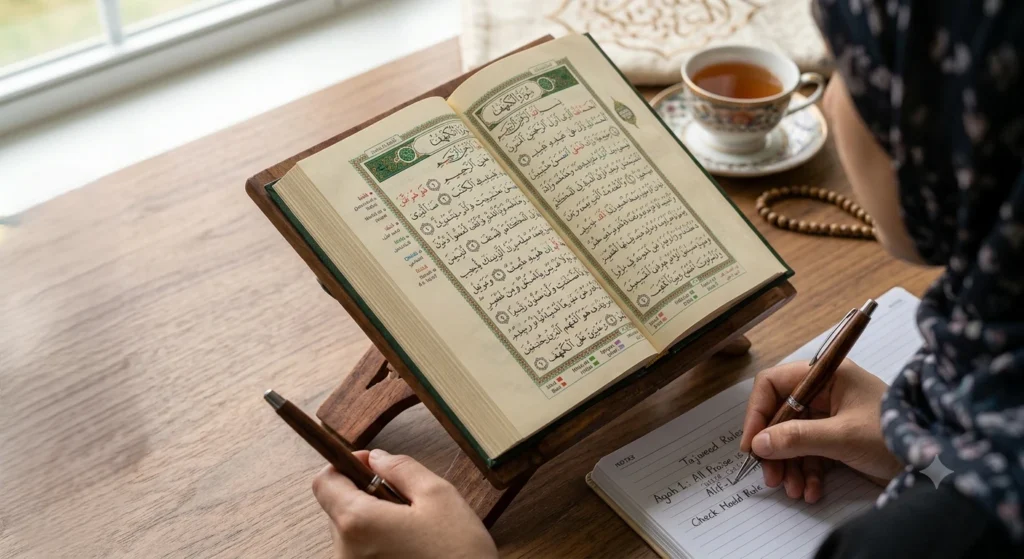
Why Is Tajweed Important for Every Muslim?
Many people assume Tajweed is only about making recitation sound beautiful. It certainly helps with that, but its purpose goes much deeper.
Proper pronunciation helps preserve the intended meaning of the Quran. It also allows readers to approach recitation with greater confidence and care, whether they’re reading privately at home or during prayer.
I’ve heard parents mention something interesting over the years. A child who learns correct pronunciation early often reads with confidence later, while someone who develops habits without guidance may spend extra time unlearning them. Neither path is “wrong”-it’s simply easier to build good habits from the beginning.
And confidence matters more than many people realize. When reading feels less stressful, people often find themselves opening the Quran more frequently. That’s a meaningful change.
The Basic Rules of Tajweed Every Beginner Should Know
Here’s some good news: you don’t need to learn dozens of complicated rules before opening the Quran.
Most beginners focus on just a handful of essential principles. The details come later, naturally, one lesson at a time.
Correct Pronunciation (Makharij)
Makharij refers to where each Arabic letter is produced in the mouth and throat.
Some sounds simply don’t exist in English or French, which explains why beginners sometimes struggle. That’s completely normal. In fact, many learners laugh the first time they try certain letters because they sound so unfamiliar (and honestly, that’s part of learning).
A teacher’s correction often makes all the difference.
Letter Characteristics (Sifaat)
Every Arabic letter has its own characteristics.
Some letters are pronounced with a heavier sound, while others remain light and soft. At first, these differences may seem subtle. Then one day, almost unexpectedly, your ear starts noticing them automatically.
That’s usually a satisfying moment for learners.
Common Rules You’ll Learn First
Most introductory Tajweed lessons cover practical rules such as:
- Proper vowel elongation (Madd)
- Nasal sounds (Ghunnah)
- Stopping and starting correctly during recitation
- Smooth pronunciation when certain letters meet
Rather than memorizing technical definitions, beginners usually absorb these rules by reading aloud and receiving gentle corrections. It’s surprisingly effective.
Can Adults and Children Learn Tajweed?
Absolutely.
One of the biggest misconceptions is that Tajweed should only be learned in childhood. Children often pick up pronunciation quickly, yes-but adults learn successfully every single day.
A working parent might study after dinner. A university student may fit lessons between classes. Someone who’s retired finally has the time they’ve wanted for years. Different situations, same goal.
Sometimes people quietly ask, “Am I too old to start?”
The answer is simple: no.
Learning the Quran isn’t a race. Everyone begins from wherever they are today.
Common Tajweed Mistakes Beginners Make
Mistakes are expected. Really.
Some of the most common ones include:
- Mixing up similar Arabic letters
- Reading too quickly
- Forgetting proper pauses
- Stretching short vowels longer than necessary
- Feeling nervous and rushing through verses
One beginner once admitted, “I thought reading faster meant I was improving.”
Actually, slowing down often leads to faster improvement. It sounds backwards, but experienced teachers see it again and again.
If possible, record yourself reading from time to time. Listening back feels a little uncomfortable at first (most people don’t enjoy hearing their own voice), yet it’s one of the easiest ways to notice recurring mistakes.
How Long Does It Take to Learn Tajweed?
This is probably one of the most common questions.
The honest answer? It depends.
Someone who practices fifteen or twenty minutes each day may notice real improvement within a few months. Becoming consistently comfortable with Tajweed usually takes longer, and that’s perfectly normal.
Progress often depends on several things:
- Previous experience with Arabic
- Practice habits
- Teacher feedback
- Personal consistency
Small daily efforts almost always outperform occasional marathon study sessions. That’s true for language learning in general-and Tajweed is no exception.
Learning Tajweed in Canada: What Are Your Options?
Today, Muslims across Canada have more learning options than ever before.
Some people enjoy learning in person. Others need flexible schedules because of work, university, or family responsibilities. Thankfully, both options are widely available.

Learning at a Local Mosque
Many local mosques offer Quran classes for children and adults.
These classes often create a welcoming sense of community. Students encourage one another, friendships develop, and learning becomes part of a shared experience.
The only challenge? Class schedules don’t always match everyone’s routine.
Learning Through Online One-to-One Classes
Online Quran learning has become a practical choice for many Canadian families.
Instead of driving across town, students can join lessons from home. For parents balancing work and children’s activities, that flexibility can make regular learning much easier.
One family described their routine simply: everyone finished dinner, the children joined their online Quran lesson, and evenings became much less hectic than before. Little changes like that often make learning sustainable.
Choosing the Right Tajweed Teacher
Not every teacher teaches the same way.
Look for someone who explains patiently, gives constructive feedback, and understands that beginners need encouragement-not constant correction.
A trial lesson is often worth taking. Sometimes you know within twenty minutes whether a teacher’s style feels comfortable.
And that’s important. Learning tends to improve when students feel relaxed enough to ask questions.
Tips to Improve Your Tajweed Faster
You don’t need hours of daily study.
Consistency matters far more than intensity.
A few habits make a noticeable difference:
- Practice every day, even for fifteen minutes.
- Listen regularly to experienced Quran reciters.
- Review previous lessons before starting new material.
- Read slowly instead of rushing.
- Ask questions whenever something feels unclear.
- Learn with a qualified teacher whenever possible.
Some days will feel productive. Others won’t. That’s completely normal.
The important thing is simply coming back tomorrow.
Frequently Asked Questions
What is Tajweed in simple words?
Tajweed is the set of pronunciation rules that helps Muslims recite the Quran accurately and respectfully.
Is Tajweed compulsory for Muslims?
Learning correct pronunciation is widely encouraged because it helps preserve proper Quran recitation. Scholars discuss different levels of obligation in different contexts, but improving one’s recitation is generally regarded as beneficial for every Muslim.
Can I learn Tajweed online in Canada?
Yes. Many students across Canada learn through live online lessons with qualified teachers who provide individual feedback and flexible scheduling.
How long does it take to read the Quran with Tajweed?
Many beginners notice improvement after several months of consistent practice. Developing confidence and fluency usually takes longer and varies from person to person.
Is Tajweed difficult for beginners?
It may seem unfamiliar at first, but most beginners find it much easier than they expected once lessons become part of a regular routine.
Final Thoughts
Learning Tajweed isn’t about becoming perfect. It’s about making steady progress, one lesson at a time, while showing care and respect for the words of the Quran.
Whether you’re starting as an adult, supporting your child, or returning after years away, every sincere effort has value. There will be easy days and challenging ones (that’s just how learning works), but consistency has a way of building confidence over time.
If you’re ready to begin, consider learning with a qualified Tajweed teacher or joining a beginner-friendly course. A structured path, regular feedback, and a little patience can make the journey feel much more manageable-and much more rewarding.